
Reviewed · MAORI CULTURAL TOURS
Māori Cultural Experience & Auckland Museum General Admission
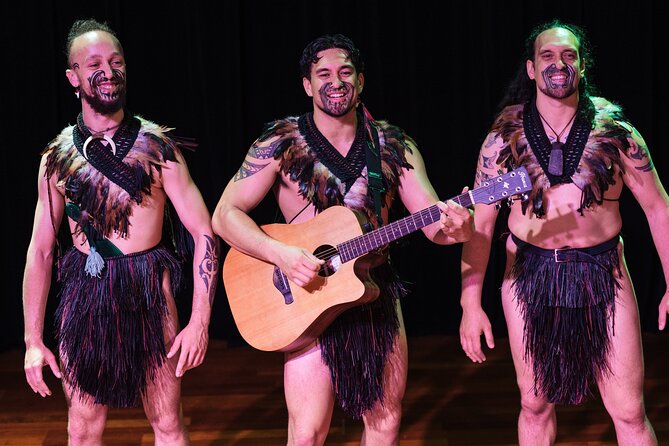
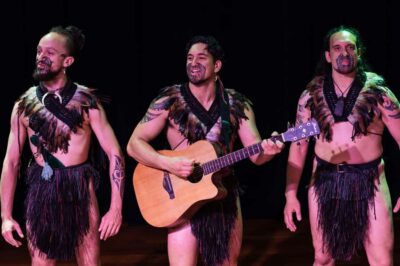
The most memorable part of this Auckland experience is the live Māori presentation, where song, movement, storytelling, and the haka explain culture rather than simply display it. You’ll see poi skills, hear waiata, and learn why the haka carries such force as a ritual of unity, strength, and identity.
I like the two-for-one value: one ticket gives you the performance and general admission to Auckland Museum. I also like the clear, welcoming teaching style, which helps you understand the meaning behind gestures, music, and traditional implements instead of watching a show with no context.
The main caution is expectation. This is a short cultural introduction, not a full evening stage production. The length and number of performers can vary, and some sessions have included only a brief haka or no haka in the form visitors expected. Also, the Māori Court and Pacific Galleries are temporarily closed for maintenance.
In This Review
- Key points to know
- A short performance with a lot of meaning
- What the 45-minute experience feels like
- Why the explanations matter
- Auckland Museum gives the ticket its extra value
- The current gallery closures matter
- Who will get the most from this experience?
- Getting there and planning your visit
- How the $38.48 price works out
- How to make the visit more rewarding
- Should you book the Māori Cultural Experience?
- FAQ
- Where does the Māori Cultural Experience take place?
- What does the ticket include?
- Are special exhibitions included?
- Are guided museum tours included?
- How long does the experience last?
- Will I see a haka?
- Are the Māori Court and Pacific Galleries open?
- Can I cancel for a full refund?
- Is the experience accessible to most people?
Key points to know
- The performance explains the haka: You learn about its origins, traditional uses, and different forms rather than seeing only a dramatic finale.
- Poi and waiata are central: Songs, movement, and gestures carry much of the presentation.
- Museum admission is included: Explore general galleries on natural history, New Zealand heritage, and cultural treasures after the show.
- Plan for 45 minutes to 3 hours: The performance is short, while the museum can fill much of an afternoon.
- Expect an introduction, not a complete cultural course: The presentation offers a respectful starting point, but it cannot cover every part of Māori life in one sitting.
- Some major galleries are closed: Check the current situation before booking if Māori and Pacific collections are your main reason for going.
A short performance with a lot of meaning
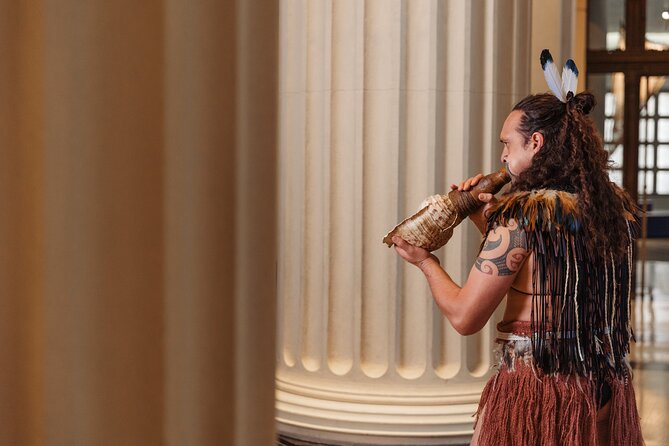
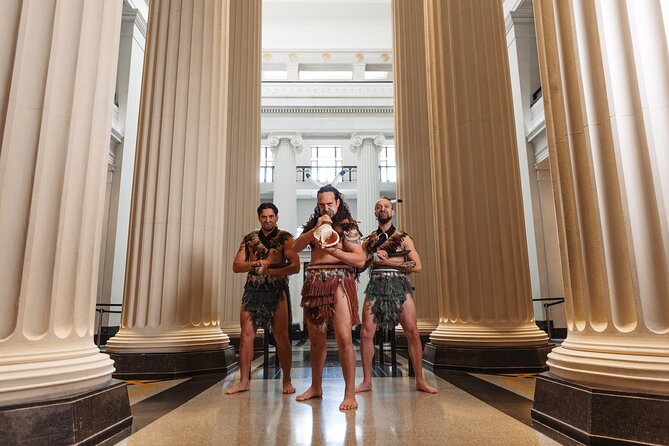
This experience begins at Auckland War Memorial Museum in Parnell. A group of Māori artists and orators leads the presentation, using live performance to introduce you to Māori traditions and ideas.
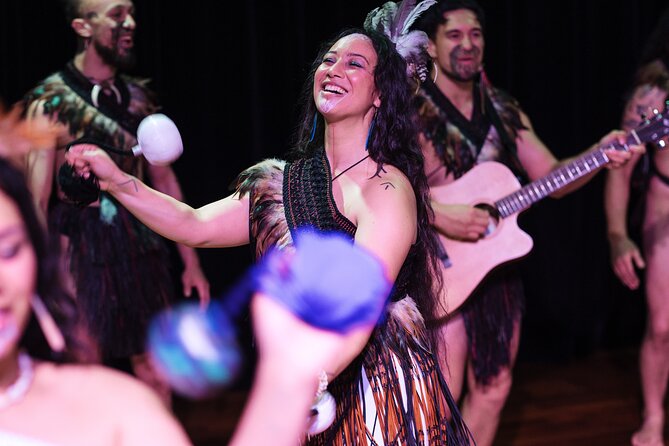
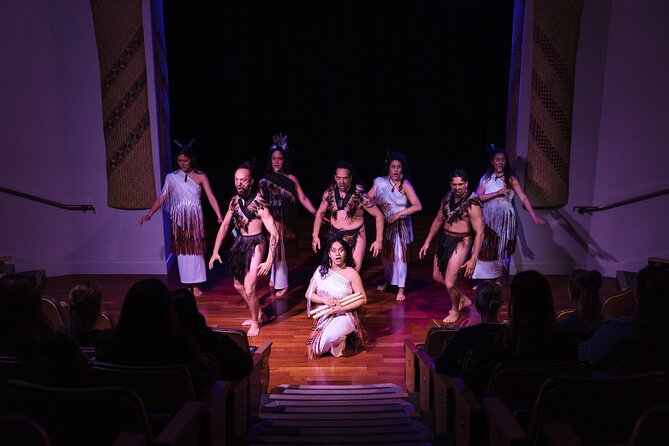
You’ll hear waiata, or traditional songs, and watch poi performed with speed and control. The program also uses narration to explain what you are seeing. That matters because a song or gesture can be beautiful on its own, but the cultural meaning gives it weight.
The presentation also looks at the haka. Many people know the haka through international sport, but the museum program places it in a wider setting. You learn about its origins, traditional uses, and differences between forms of haka. The focus is not simply on shouting, stamping, and facial expressions. It is on identity, unity, strength, and purpose.
I find that approach useful for a first visit to New Zealand. The haka is easy to reduce to a dramatic spectacle. Here, the explanations help you see it as a living practice with meaning beyond performance.
The group also speaks about the endurance of Māori people throughout New Zealand’s history. The session is designed as a welcome and an introduction, so it gives you a sense of Māori presence in modern Aotearoa as well as a look at older traditions.
More Auckland museum tickets:
- Auckland War Memorial Museum Entry Ticket
★ 4.5 · 293 reviews - Skip the Line: Auckland Museum General Admission Ticket
★ 4.5 · 183 reviews - Māori Cultural Experience & Auckland Museum Admission
★ 4.5 · 59 reviews
What the 45-minute experience feels like
The full booking is advertised as lasting from about 45 minutes to three hours. That range reflects the combination of the cultural presentation and museum admission, not a three-hour stage show.
The performance itself is usually a compact introduction. Based on the supplied descriptions, some presentations have lasted around 30 minutes, while others have felt shorter than expected. The balance is often part explanation and part music and dance, with the spoken sections helping you follow the ideas behind the movements.
You should therefore arrive ready for a focused session rather than a long theatrical production. The program is best understood as a live lesson with strong performance elements.
The songs and voices are a major part of the experience. Several accounts describe the singing as beautiful and moving, while the physical work of the poi and haka gives the presentation energy. You may find the strongest moments are not the loudest ones. A careful explanation of a gesture or belief can stay with you longer than a few minutes of spectacle.
One practical point deserves attention: the haka has not appeared in exactly the same way for everyone. Some people have seen an abbreviated haka. Others expected a larger or more forceful presentation and felt let down when the haka was brief or absent from their session.
That does not make the experience automatically poor, but it does make the wording of the booking important. If the haka is your main reason for going, check the current program and timing before you pay. If you approach the session as an introduction to Māori culture that includes an explanation of the haka, you are likely to have a better match between expectation and reality.
Why the explanations matter
A cultural performance can become shallow when visitors are shown costumes and movements without being told what they mean. This presentation tries to avoid that problem through narration by Māori orators and artists.
You’ll hear about the role of songs, actions, and implements. The teaching also deals with ideas that do not translate neatly into one English word. That is useful because Māori culture cannot be reduced to a list of customs or a few familiar images.
The spoken sections are especially helpful for people seeing Māori traditions for the first time. You get a basic framework for understanding welcome, inclusion, identity, and cultural continuity. If you already know something about Māori culture, the performance may feel more like a respectful reminder and a chance to see the material presented with live energy.
I would not expect a full account of Māori history in half an hour. The program has to choose its subjects, and the emphasis appears to be on introduction and connection rather than detailed chronology. Some people would prefer more background on history and culture, while others appreciate the clear, manageable format.
That is a fair trade for a short museum performance. You can build on the introduction by spending time in the museum’s New Zealand collections, although some of the main Māori and Pacific galleries are temporarily closed.
Auckland Museum gives the ticket its extra value
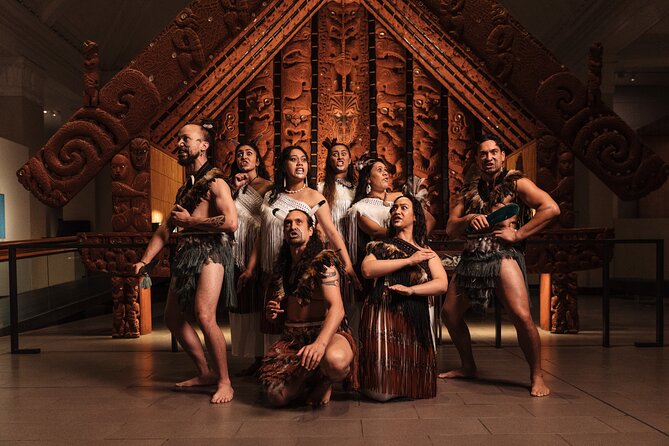
The ticket includes general admission to Auckland Museum, and that is a major part of the deal. At $38.48 per person, the price is easier to justify if you make time for the building after the performance.
The museum covers natural history, New Zealand heritage, and treasured taonga. That lets you place the live presentation in a wider setting. You can move from songs and oral explanation to objects, displays, and broader accounts of the country’s natural and cultural past.
The museum also includes exhibits connected with New Zealand’s war history. A visit can therefore range well beyond the performance. If you enjoy museums, I would allow several hours rather than treating general admission as a minor extra.
The value is less convincing if you only want a quick haka show. You are paying for a combined cultural and museum visit, not a standalone concert. The performance may be the reason you book, but the museum is what makes the price work best.
Special exhibitions that require a separate ticket are not included. Guided tours are also not included, so you should expect to explore the general museum displays on your own unless you arrange something else separately.
More Maori cultural experiences near Auckland:
- Auckland: All Blacks Experience Guided Cultural Tour
★ 4.7 · 453 reviews - All Blacks Experience: Interactive Guided Cultural Tour
★ 4.5 · 228 reviews - Auckland: Rotorua Wai-O-Tapu, Te Puia with Haka
★ 4.9 · 161 reviews - From Auckland: Rotorua Māori Village & Activity Combinations
★ 4.7 · 125 reviews
The current gallery closures matter

The Māori Court and Pacific Galleries are temporarily closed for essential maintenance. This is the most important limitation for anyone booking mainly to see Māori objects in the museum itself.
The live presentation still offers an introduction to Māori culture, but the closed galleries reduce the amount of related material you can view afterward. Some parts of the museum remain open, including displays on natural history, New Zealand heritage, and other cultural treasures, but you should not assume that every Māori and Pacific collection will be available.
I would check the closure status close to your visit. If the Māori Court is the centerpiece of your museum plan, waiting until it reopens may make more sense. If you want a live presentation plus a broad museum visit, the booking can still work well.
Who will get the most from this experience?
This suits you if you are visiting Auckland for the first time and want a straightforward introduction to Māori traditions. It also works well for families and mixed-age groups because the format combines explanation, music, movement, and museum displays.
I would recommend it for people who want context rather than a purely visual show. The narration helps you understand what the performers are doing, and the museum gives you more to see once the presentation ends.
It is also a sensible choice if you have relatives or friends from overseas. The program offers a clear first look at an important part of New Zealand’s identity without requiring prior knowledge.
People already familiar with Māori culture may still enjoy the performance, especially for the singing, poi, and live presentation. But you may want a longer cultural program elsewhere if you are seeking detailed regional traditions, extended storytelling, or a full-scale haka performance.
I would be cautious if you want a polished stage show with a fixed running time and a large cast. The number of performers has not always matched the advertised figure, and the performance can feel abbreviated. Treat the session as a museum-based cultural welcome, not a major theatre production.
Getting there and planning your visit
The meeting and ticket redemption point is Auckland War Memorial Museum, Parnell, Auckland 1010. The museum is near public transportation, so you do not need a private vehicle to reach it.
Your activity begins and ends at the museum. Confirmation is sent within 48 hours of booking, subject to availability. Since the experience requires a minimum number of participants, the provider may offer another date or experience, or a full refund, if that minimum is not reached.
I would plan the visit around the performance time, then leave room for the museum. The advertised total range of 45 minutes to three hours gives you a useful guide, but your actual visit depends on how long you spend in the general galleries.
Wear comfortable shoes if you plan to see the museum properly. That is simple advice, but it matters more than rushing through the building just to say you have been there.
Service animals are allowed, and most people can participate. The booking information does not provide a detailed accessibility breakdown, so contact the provider directly if you need specific arrangements beyond those points.
How the $38.48 price works out

At $38.48 per person, this is reasonable when you use both parts of the ticket. The performance gives you a live introduction to Māori culture, while the museum admission lets you continue learning at your own pace.
The combination can also save time at the museum entrance, and the booking information indicates that the package may be cheaper than buying through the museum website. Prices can change, so treat $38.48 as the stated rate rather than a permanent guarantee.
The value drops if you arrive only for a brief presentation and leave immediately. The show may last about 30 minutes or less in some cases, and several people have felt that it did not fill the expected time. The museum is the best reason to schedule this as a half-day stop rather than a quick appointment.
Special exhibitions cost extra, and guided tours are not part of the package. Those exclusions are normal, but they matter if you have budgeted for a full set of museum activities.
How to make the visit more rewarding
Read a little about the meaning of the haka before you go, but do not expect a short online summary to replace the live explanation. Knowing that the haka has different forms and uses will help you pay attention to the details rather than waiting only for the most dramatic section.
Give the performance your full attention. The songs may not always be translated word for word, and some meaning is explained through concepts, movement, and narration. If you need every waiata or haka line translated, this may leave you wanting more.
Show respect during the presentation. This is not a staged novelty act built only for photographs. The performers are presenting living traditions, and the session works best when you listen to the explanations as carefully as you watch the movement.
Afterward, use the museum to fill in the gaps. Spend time with New Zealand heritage and natural history displays, then consider how objects and stories add to what you heard on stage. With the Māori Court and Pacific Galleries closed, you may need to adjust that plan, but there is still enough general admission material to make the stop worthwhile.
Should you book the Māori Cultural Experience?
I would book this if you want a short, respectful introduction to Māori culture paired with a substantial museum visit. The singing, poi, storytelling, and explanation of the haka give the experience more substance than a quick photo opportunity.
I would not book it expecting a long, fixed-format haka show. The performance can be shorter than advertised, the cast may be smaller than expected, and the haka may be abbreviated depending on the session.
At $38.48, the smart choice is to allow plenty of time for Auckland Museum. If you do that, the package offers a useful first look at Māori traditions and a broad cultural stop in Auckland. If the closed Māori and Pacific galleries are your main goal, check their status before booking or wait until they reopen.
FAQ
Where does the Māori Cultural Experience take place?
It takes place at Auckland War Memorial Museum in Parnell, Auckland. The ticket redemption point is also Auckland Museum, and the activity ends back at the meeting point.
What does the ticket include?
The ticket includes the Māori cultural performance and general admission to Auckland Museum.
Are special exhibitions included?
No. Special exhibitions requiring a separate ticket are not included.
Are guided museum tours included?
No. Guided tours are not included with this booking.
How long does the experience last?
The complete visit is listed as approximately 45 minutes to three hours. The performance itself is a shorter part of the visit, while the remaining time can be spent exploring the museum.
Will I see a haka?
The experience explains the origins, traditional uses, and differences of the haka. The exact presentation can vary, and some sessions have featured an abbreviated haka or no haka in the form some people expected.
Are the Māori Court and Pacific Galleries open?
They are temporarily closed for essential maintenance. Check the current status before visiting if those galleries are important to your plans.
Can I cancel for a full refund?
Yes. You can cancel up to 24 hours before the experience start time for a full refund. Cancellations or changes made less than 24 hours in advance are not accepted for a refund.
Is the experience accessible to most people?
Most people can participate, and service animals are allowed. The venue is near public transportation. Confirmation is provided within 48 hours of booking, subject to availability.
More Museums in Auckland
- Explore gardens & galleries filled with incredible art, Matakana
★ 5.0 · 186 reviews - Auckland: Maritime Museum Entry Ticket
★ 4.6 · 29 reviews - Gallery Highlights Tour and General Admission
★ 4.5 · 14 reviews - Private Night Tour of Auckland, Sky Tower Bar, Bridge & Museum
★ 5.0 · 8 reviews
Just added around Auckland
- Hobbiton Movie Set Guided Day Tour with Lunch from Auckland★ 5.0 · 3 reviews
- Heke Brewery and Distillery Tour in Waiheke Island with samples★ 4.5 · 3 reviews
- Auckland: Full-Day Fishing Charter (7 am – 4 pm)★ 4.3 · 3 reviews
- London Routemaster Double Decker Auckland Discovery★ 5.0 · 3 reviews
- Boutique Waiheke Island Wine, Gin and Food Tour★ 5.0 · 3 reviews
- Auckland: 36 min scenic helicopter flight – Coast to Coast★ 5.0 · 3 reviews
- Auckland City Highlights Full Day Tour★ 4.6 · 3 reviews
- Twilight Wild Kiwi Bird Encounter Private Tour★ 5.0 · 3 reviews
Maori Cultural Tours, compared.

All Blacks Experience: Interactive Guided Cultural Tour
Read our review →

Māori Cultural Experience & Auckland Museum Admission
Read our review →

Ex Auckland: Rotorua Māori Village with Haka and Hot Springs
Read our review →
Browse the lists this tour appears in