
Reviewed · MAORI CULTURAL TOURS
All Blacks Experience: Interactive Guided Cultural Tour
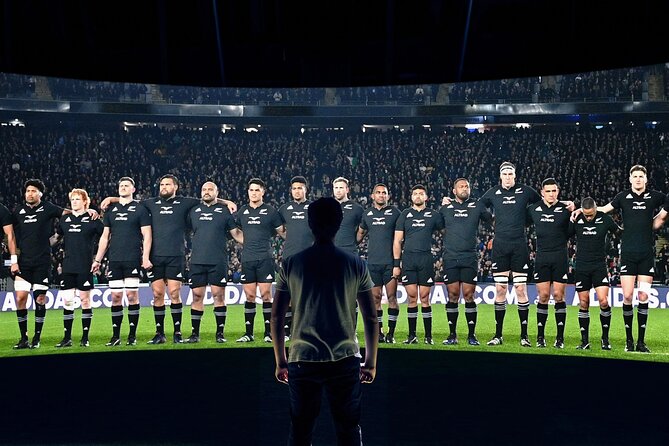
The haka is the heart of this Auckland experience. You do not simply watch a short cultural performance from a distance. You walk through a players’ tunnel, face the All Blacks and Black Ferns, and feel how Māori tradition, team identity, and sporting theatre come together. The result is part museum, part live show, and part hands-on rugby lesson.
I like the way the guides connect rugby with Māori culture, rather than treating the All Blacks as just a famous sports brand. I also like the mix of stories, memorabilia, sound, and games, which gives children something to do while adults pick up the larger story. The one drawback is that serious New Zealand rugby followers may find some of the background familiar.
In This Review
- Key things to know before you book
- Why the haka gives this Auckland visit its meaning
- Starting on Federal Street in central Auckland
- Entering the All Blacks and Black Ferns story
- The changing room, tunnel, and haka
- Testing your skills in the Step-up activity
- What makes it good for children and non-rugby fans
- The final store and the value of the visit
- Practical details that shape the experience
- Who should book the All Blacks Experience
- Should you book it?
- FAQ
- How long does the All Blacks Experience take?
- Where does the experience begin?
- Does the experience include admission?
- Is the haka part of the experience?
- Is the experience suitable for children?
- Is food included?
- Can I cancel for a refund?
Key things to know before you book
- The haka is the emotional high point: You walk down a replica players’ tunnel and face a powerful performance tied to Māori identity and team unity.
- You do not need to know rugby: Guides explain the sport, the All Blacks, the Black Ferns, and the wider New Zealand setting for newcomers.
- The hands-on section matters: The Step-up activity lets you test your skills instead of only watching screens and displays.
- Plan on 90 minutes: The experience is compact enough for a morning or afternoon in central Auckland.
- It works well for families: Adults, children, rugby fans, and people who normally prefer other sports can all take part.
- Wear comfortable shoes: Flat shoes make the interactive activities easier, and the final room can be loud. Ear defenders are available.
Why the haka gives this Auckland visit its meaning
Many sports attractions show trophies, old jerseys, and famous faces. This one aims for something bigger: an explanation of why rugby carries such weight in New Zealand. The All Blacks are presented as part of national identity, with Māori culture, language, respect, discipline, and collective pride woven through the visit.
That makes the experience useful even if you cannot explain a scrum or name a single All Black. You are given a basic sporting framework, then shown how the national teams represent values that reach beyond the field.
The haka is the clearest example. You stand in front of a performance built around strength, unity, and presence. It is not treated as a decorative dance added for tourists. The setting links it to the team’s preparation and sense of purpose. That close, theatrical encounter is the moment most likely to stay with you after the visit.
I would still set your expectations correctly. This is not a full Māori cultural tour, and it is not a live rugby match. The Māori material is presented through the story of the All Blacks and Black Ferns. If you want a broad introduction to New Zealand’s Indigenous culture, this offers one useful angle, but not the whole picture.
More Maori cultural experiences near Auckland:
- Auckland: All Blacks Experience Guided Cultural Tour
★ 4.7 · 453 reviews - Auckland: Rotorua Wai-O-Tapu, Te Puia with Haka
★ 4.9 · 161 reviews - From Auckland: Rotorua Māori Village & Activity Combinations
★ 4.7 · 125 reviews
Starting on Federal Street in central Auckland
The experience begins at 88 Federal Street, in Auckland Central, close to the Sky Tower and easy to pair with other CBD sightseeing. Its central location is a real advantage. You can fit it around a city walk, a meal, or a visit to the Sky Tower without spending much of your day getting across town.
A mobile ticket keeps arrival simple. Public transport is nearby, and the activity returns to the same meeting point, so you do not need to plan a separate pickup or work out where the tour ends.
The group can contain up to 26 people. That is large enough to create energy during the interactive parts, but still small enough for a guide to lead the room and explain the displays. Allow about 90 minutes from start to finish. The pace is active, though not rushed.
One practical tip is to avoid carrying a large bag if you can. Baskets are available at reception for belongings, but travelling light makes the activity rooms easier to enjoy. Wear flat, comfortable shoes. You may be standing, walking through the set, and taking part in the skill challenges.
Entering the All Blacks and Black Ferns story
The first part sets up the teams and the values behind them. You hear about famous players and the development of the All Blacks, while the Black Ferns are included in the wider story of New Zealand rugby. Displays and memorabilia help turn names and records into something more tangible.
A guide leads the visit, so this is not a silent room-by-room exhibition. The guide explains what you are seeing, answers questions, and keeps the group moving. The quality of that personal presentation matters here because a collection of jerseys and facts could otherwise feel flat.
Several guides have been singled out for their enthusiasm and clear explanations, including Samual, Sam, Ben, Tanya, and Rueben in different sessions. You cannot choose a particular guide from the information provided, but the experience depends on having someone who can make rugby understandable to people starting from zero.
I appreciate that the presentation does not assume every person in the room is a rugby expert. You may arrive knowing only that the All Blacks wear black and perform a haka. The guide gives you enough context to follow the rest of the visit without turning the first section into a technical lecture.
For committed fans, the value is different. You can place familiar players and team traditions into a cultural setting, then see how the experience turns sporting knowledge into physical activities and atmosphere.
The changing room, tunnel, and haka
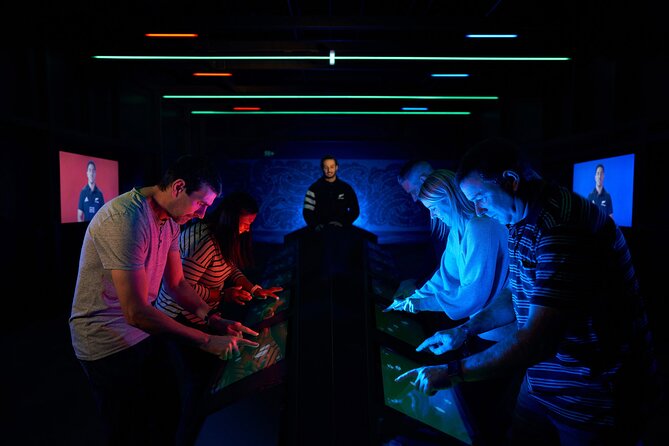
The replica changing room is designed to shift the mood. This is where the experience moves away from ordinary museum display and toward performance. You get a sense of the pre-match setting, then walk through the tunnel toward the haka.
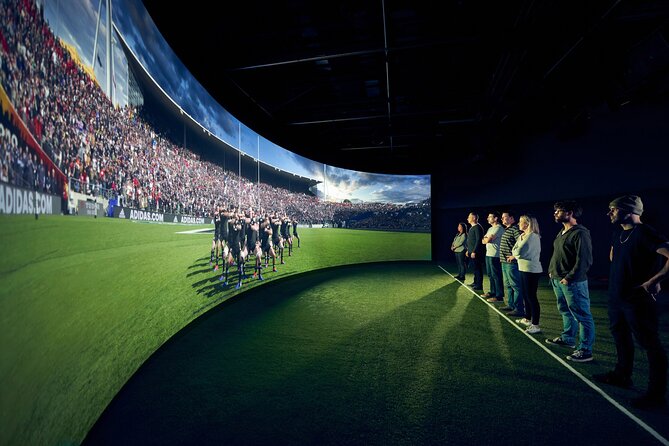
The tunnel sequence is the strongest piece of staging. You are positioned as if facing the teams, with sound and atmosphere doing much of the work. The haka is powerful, and its role is explained as a Māori performance linked with strength and unity.
This part can feel intense, especially for children or anyone sensitive to loud sound. The final room is described as loud, and ear defenders are available if you need them. That small detail is worth remembering when planning with young children.
The presentation also gives the haka proper respect. You are not asked to treat it as a novelty or copy it for a quick photo. Instead, you see how it functions as a statement of identity and collective focus. That distinction gives the cultural material more weight.
For many people, this is the point where the All Blacks become more than a sports team. The emotional effect comes from the combination of sound, darkness, team imagery, and the guide’s explanation. It is theatrical, but the subject is not empty spectacle.
A few more Auckland tours and experiences worth a look
- Auckland Historic Bar Tour
★ 5.0 · 54 reviews - Waiheke Island History and Heritage Tour
★ 5.0 · 39 reviews - Bay of Islands Heritage Experience from Auckland incl. Waitangi & Russell
★ 5.0 · 10 reviews - Auckland Walking Tour: Small-Group History & Culture Experience
★ 5.0 · 10 reviews
Testing your skills in the Step-up activity
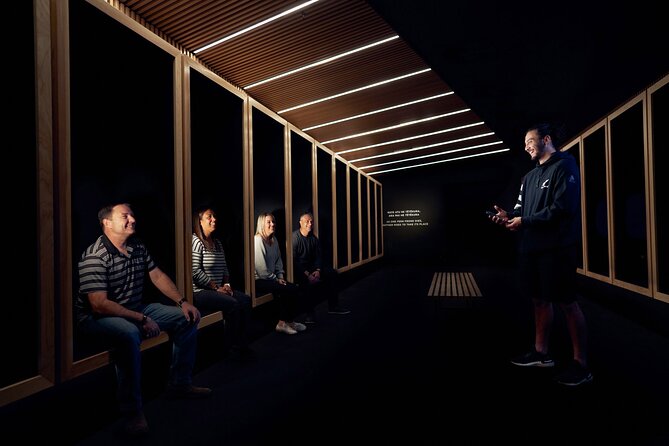
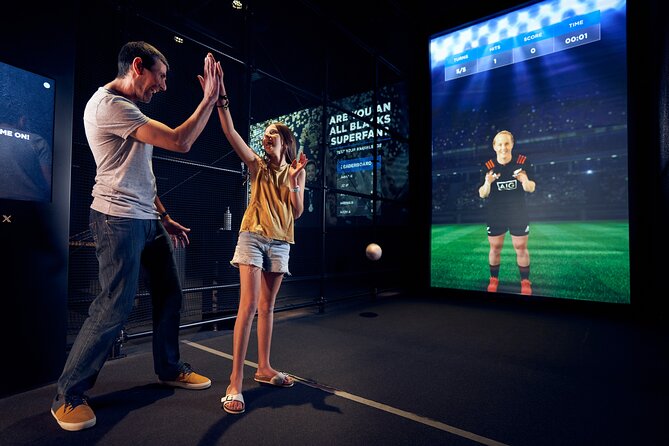
After the presentation, you get to take part in the hands-on Step-up activity. This is a welcome change of pace. Instead of listening to more facts, you test your own sporting ability through interactive challenges.
The exact skill results will depend on you, not the team. That is part of the fun. Children can compete with parents, friends can compare scores, and rugby fans can see how their confidence holds up when the ball is in their hands.
You do not need to be fit or experienced to join in. The activities are meant to be accessible to ordinary visitors, and most people can participate. Still, flat shoes and comfortable clothing are sensible choices. A visit in restrictive clothes or slippery footwear may make the active section less enjoyable.
This section also helps non-sports people. One especially useful feature of the experience is that it gives you a physical sense of rugby rather than asking you to absorb rules from a screen. You may still not understand every position or tactic, but you come away with a better feel for the skills and teamwork involved.
The activity is not likely to satisfy someone looking for a serious coaching clinic. Think of it as a short, playful test that reinforces the themes of effort, teamwork, and coordination.
What makes it good for children and non-rugby fans
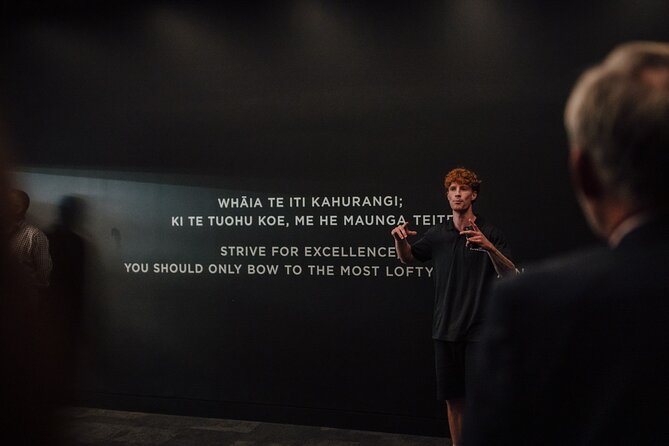
The experience is aimed at adults and children alike, and the format supports that claim. Younger visitors get movement, sound, games, and the excitement of facing the haka. Adults get the cultural setting, team stories, and a clearer picture of why rugby matters so much in New Zealand.
I would recommend it to a family with mixed interests. One person can be a devoted All Blacks supporter, another can prefer soccer, and a third can know almost nothing about sport. The guide-led format gives everyone an entry point.
It also works for first-time visitors to New Zealand who want more than a general city attraction. The All Blacks are a practical way into Kiwi culture because the teams bring together sport, national pride, Māori tradition, and public ritual.
There is a limit. If you are a local who follows the All Blacks closely, you may already know much of the basic team story. The interactive rooms and haka can still provide atmosphere, but the educational value will be stronger for international visitors and casual fans.
Children who are not interested in sport may enjoy the show and games, but the historical sections could hold their attention less well. The visit is family-friendly, not a dedicated play centre.
The final store and the value of the visit
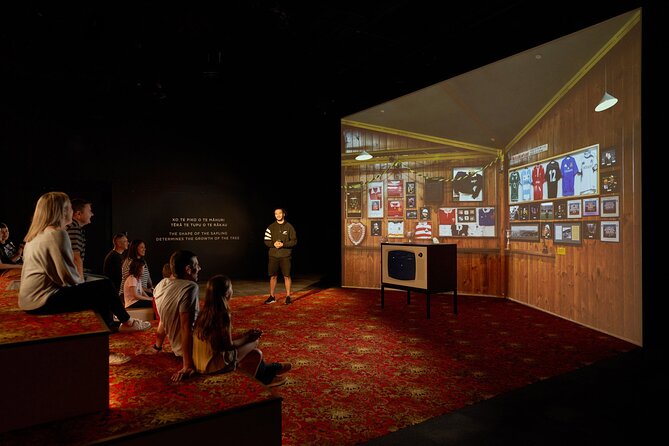
The route finishes in Auckland’s largest official All Blacks retail store. This is convenient if you want a jersey, cap, souvenir, or other team merchandise. It also gives the experience a clear commercial ending, which some people will enjoy and others may find less appealing.
You are not required to shop, so treat the store as an optional final stop. If you are travelling with a rugby fan, the retail section may be part of the attraction. If you are trying to keep your budget tight, you can simply look around and leave.
At $42.82 per person, the experience is not a cheap museum admission. Its value depends on what you want from the 90 minutes. You are paying for a guided presentation, staged cultural performance, interactive challenges, memorabilia, and a central Auckland location.
That price is easier to justify if you have a genuine interest in the All Blacks, the haka, or New Zealand culture. It is also reasonable for families who want an activity with clear structure and indoor entertainment. If you only want to see a rugby jersey collection, the cost may feel high.
The visit is best judged as a compact attraction rather than a full-day tour. You do not lose a large part of your schedule, and you can combine it with the Sky Tower, which is nearby. Book it when you want an organized Auckland activity that mixes education with showmanship.
Practical details that shape the experience

The ticket is mobile, confirmation arrives at booking, and free cancellation is available until 24 hours before the start time. Changes or cancellations inside that 24-hour window are not accepted for a refund. The activity also requires a minimum number of participants, so a cancellation by the operator may result in another date or a full refund.
Most people can take part, and the venue is near public transport. The supplied information does not describe specific wheelchair access, so contact the provider directly if you need detailed mobility arrangements.
Snacks and lunch are not included. That is not a problem for a 90-minute activity, but plan food around it if you are building a full day in Auckland. The central location gives you plenty of flexibility, though the experience itself ends back at Federal Street.
The final room may be loud. Ear defenders are available, which is helpful for young children and anyone who dislikes sudden sound. You can also leave bags in baskets at reception, but carrying only what you need will make the interactive portions more comfortable.
Who should book the All Blacks Experience
I would put this high on the list for:
- International visitors who want a clear introduction to New Zealand rugby and Māori culture
- Families seeking an indoor activity in Auckland Central
- Rugby fans who want team stories, memorabilia, and a strong haka presentation
- People visiting the Sky Tower who need another nearby activity
- Sports fans who enjoy trying interactive challenges rather than only reading displays
I would be more cautious if you are a lifelong New Zealand rugby follower looking for rare archival material or advanced team analysis. The format favors broad appeal, guided storytelling, atmosphere, and participation.
The guide makes a major difference. Past sessions have included Samual, Sam, Ben, Tanya, and Rueben, all praised for bringing energy and clear explanations. Since the guide is central to the experience, a lively presentation can make familiar information feel fresh, while a quieter delivery may leave dedicated fans wanting more.
Should you book it?
Book the All Blacks Experience if you want to understand why rugby and the haka matter in New Zealand, not just collect a few sports facts. The strongest parts are the guide-led cultural context, the walk through the tunnel, the haka, and the chance to take part in the Step-up challenges.
At $42.82, it is best value for first-time visitors, families, and anyone who likes a polished indoor attraction with a clear beginning and end. Rugby experts may find the background basic, but the staging and cultural focus still give the visit purpose.
Wear comfortable shoes, travel light, and allow the full 90 minutes. Pair it with the nearby Sky Tower if you want to make the most of this central Auckland location.
FAQ
How long does the All Blacks Experience take?
Allow approximately 90 minutes for the guided experience.
Where does the experience begin?
It starts at 88 Federal Street, Auckland Central, Auckland 1010, New Zealand.
Does the experience include admission?
Yes. Admission to the All Blacks Experience is included.
Is the haka part of the experience?
Yes. You walk through a players’ tunnel and face a powerful haka connected with Māori culture, strength, and unity.
Is the experience suitable for children?
Yes. It is designed for adults and children, with interactive games and hands-on activities. The final room can be loud, and ear defenders are available.
Is food included?
No. Snacks and lunch are not included.
Can I cancel for a refund?
Yes. You can cancel at least 24 hours before the local start time for a full refund. Cancellations or changes made less than 24 hours before the start time are not accepted for a refund.
Just added around Auckland
- Heke Brewery and Distillery Tour in Waiheke Island with samples★ 4.5 · 3 reviews
- Hobbiton Movie Set Guided Day Tour with Lunch from Auckland★ 5.0 · 3 reviews
- Auckland: Full-Day Fishing Charter (7 am – 4 pm)★ 4.3 · 3 reviews
- London Routemaster Double Decker Auckland Discovery★ 5.0 · 3 reviews
- Boutique Waiheke Island Wine, Gin and Food Tour★ 5.0 · 3 reviews
- Auckland: 36 min scenic helicopter flight – Coast to Coast★ 5.0 · 3 reviews
- Auckland City Highlights Full Day Tour★ 4.6 · 3 reviews
- Coromandel Peninsula Discovery – Private Tour From Auckland★ 5.0 · 3 reviews
Maori Cultural Tours, compared.


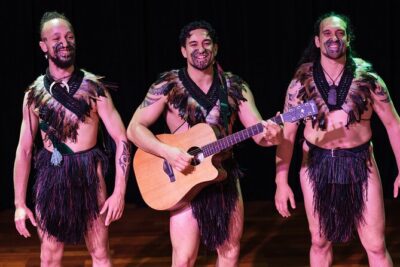
Māori Cultural Experience & Auckland Museum General Admission
Read our review →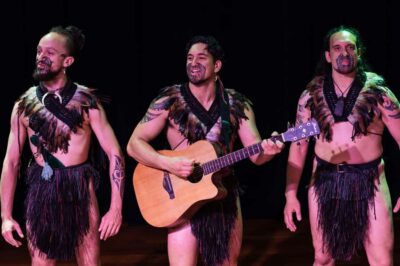
Māori Cultural Experience & Auckland Museum Admission
Read our review →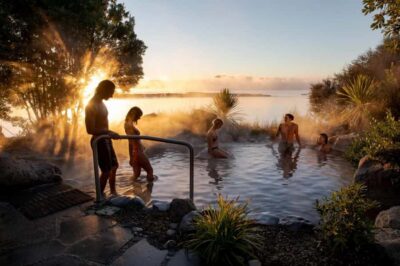
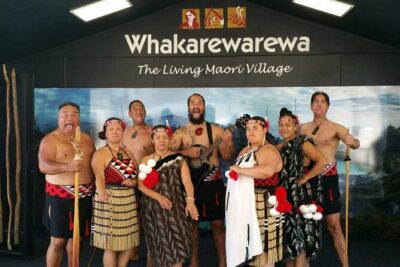
Ex Auckland: Rotorua Māori Village with Haka and Hot Springs
Read our review →
Browse the lists this tour appears in