
Reviewed · MAORI CULTURAL TOURS
Māori Cultural Experience & Auckland Museum Admission
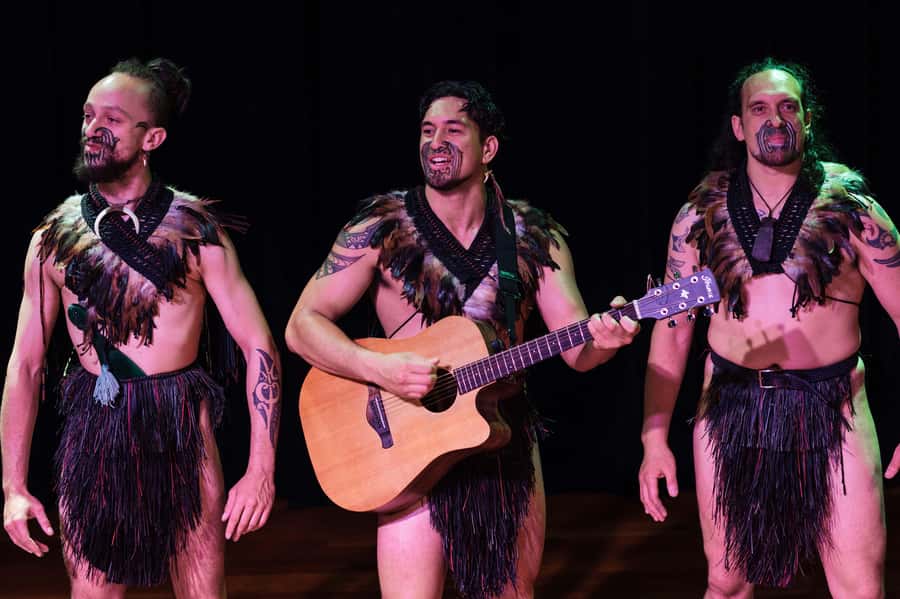
A powerful 30-minute Māori performance gives this Auckland outing its heart. At Living Taonga, indigenous artists and orators use waiata, poi, storytelling, and dance to explain Māori identity, while the haka comes across as a ritual of strength, unity, and belonging rather than a simple war dance. Your ticket also covers a full day at Auckland Museum.
I like the clear explanations that put each movement and song into context, and I like that the performance is paired with exhibits on New Zealand’s natural world and heritage. The main consideration is value: at $37 per person, it is good value if you stay for several hours, but the performance alone is only about 30 minutes. The Māori Court and Pacific Galleries are also temporarily closed for maintenance.
In This Review
- Key points to know before you book
- Living Taonga, a short performance with a clear purpose
- Understanding the haka beyond the famous image
- Why the museum turns this into a full-day visit
- A practical way to plan your museum day
- Getting to Auckland War Memorial Museum
- Is $37 good value?
- What makes the performance especially worthwhile
- What to see after the cultural session
- Who should book Living Taonga?
- FAQ
- How long does the Māori Cultural Experience last?
- What does the Māori performance include?
- Is Auckland Museum admission included?
- What are the museum opening hours?
- Are the Māori Court and Pacific Galleries open?
- Is the experience wheelchair accessible?
- Can I cancel or pay later?
- Should you book it?
Key points to know before you book
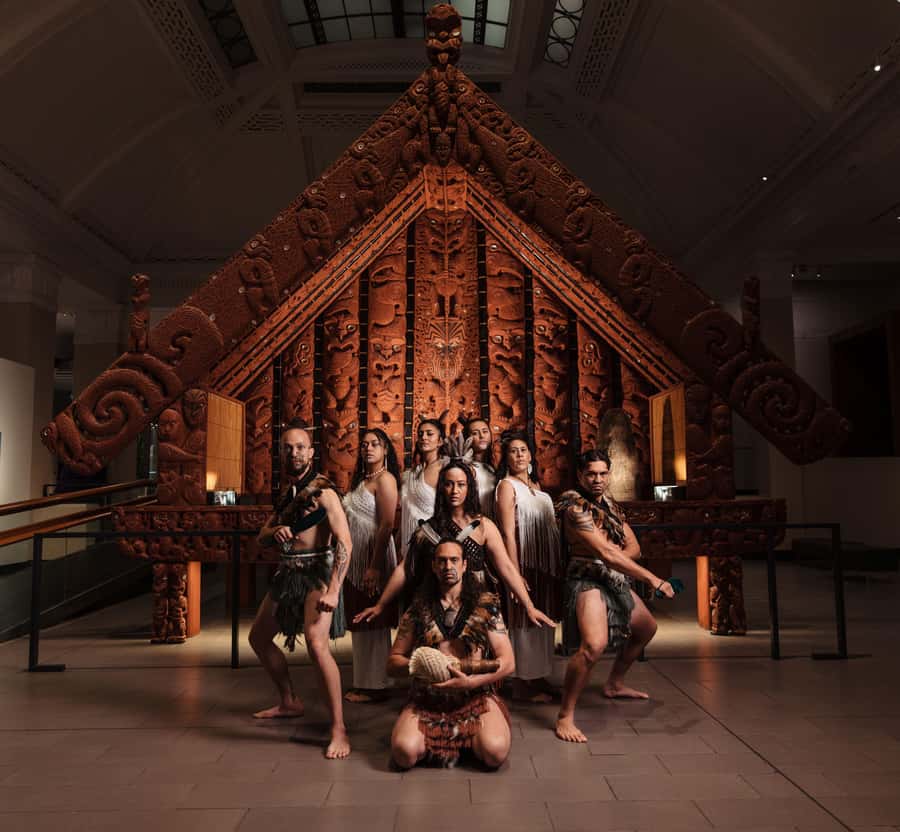
- The performance lasts about 30 minutes: It is short enough to fit into a busy Auckland day, but substantial enough to include songs, poi, chants, movement, and storytelling.
- The haka gets proper context: You learn about its meaning and purpose instead of seeing it treated as a quick spectacle.
- Your ticket is valid for one day: Plan to arrive early and use the museum as the main part of your visit.
- The museum adds real value: Natural history, New Zealand heritage, and Māori taonga fill out the day beyond the performance.
- Book the cultural session ahead: Places are subject to availability, and the performance is not offered on Anzac Day, April 25.
- Expect a central Auckland location: The museum sits at Auckland War Memorial Museum in Parnell, about a 30-minute walk or five-minute drive from the city center.
Living Taonga, a short performance with a clear purpose
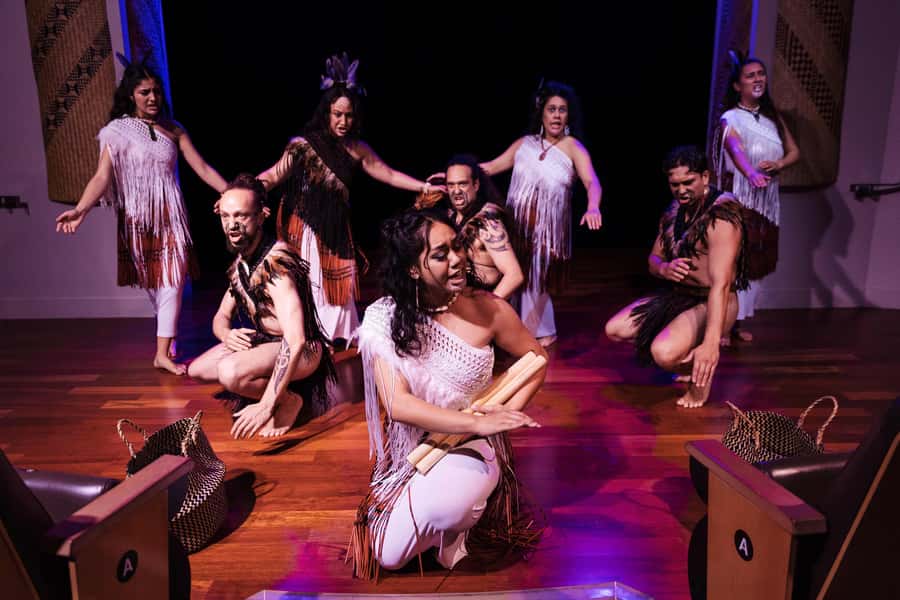
Living Taonga is designed as an introduction to Māori culture, and its strongest feature is the way it explains what you are seeing. The artists do not simply perform a series of songs and dances. Storytelling helps connect the waiata, poi, chants, and gestures to Māori traditions and identity.
That matters because some cultural performances can leave you admiring the movement without understanding it. Here, the narrator explains the action, and the presentation includes humor as well as serious material. You get a more useful first look at Māori culture when the performance gives meaning to the sound and movement.
The artists are described as esteemed indigenous performers and orators, and the presentation is hosted in English and Māori. The spoken introduction helps you follow the performance even if you know little about Aotearoa New Zealand before arriving.
The show includes traditional waiata, or songs, and poi, in which performers manipulate weighted balls attached to cords. The skill is immediately striking, but the performance also shows how these elements belong within a wider cultural setting.
More Auckland museum tickets:
- Auckland War Memorial Museum Entry Ticket
★ 4.5 · 293 reviews - Skip the Line: Auckland Museum General Admission Ticket
★ 4.5 · 183 reviews - Māori Cultural Experience & Auckland Museum General Admission
★ 4.5 · 92 reviews
Understanding the haka beyond the famous image
The haka is probably the part you already recognize. Many people first encounter it through New Zealand rugby, but Living Taonga places the ritual in a broader setting.
You learn about the haka as an expression of strength, unity, and identity. That framing helps you see the stamping, chanting, facial expressions, and coordinated movement as a statement made by a group, not merely an aggressive dance meant to entertain an audience.
This is one of the best reasons to choose the cultural experience over visiting the museum alone. The performance makes Māori culture present and human. It gives you a sound, visual memory to carry with you as you continue through the museum’s exhibits.
Do not expect a long theatrical production with elaborate scenery. The point is direct contact with song, movement, and spoken explanation. At roughly half an hour, the experience is focused, accessible, and easy to add to a museum visit.
Photography is not allowed during the performance, so put your phone away and pay attention to the presentation itself. That may disappoint anyone hoping for photos, but it also keeps the room focused on the performers rather than on recording the event.
Why the museum turns this into a full-day visit
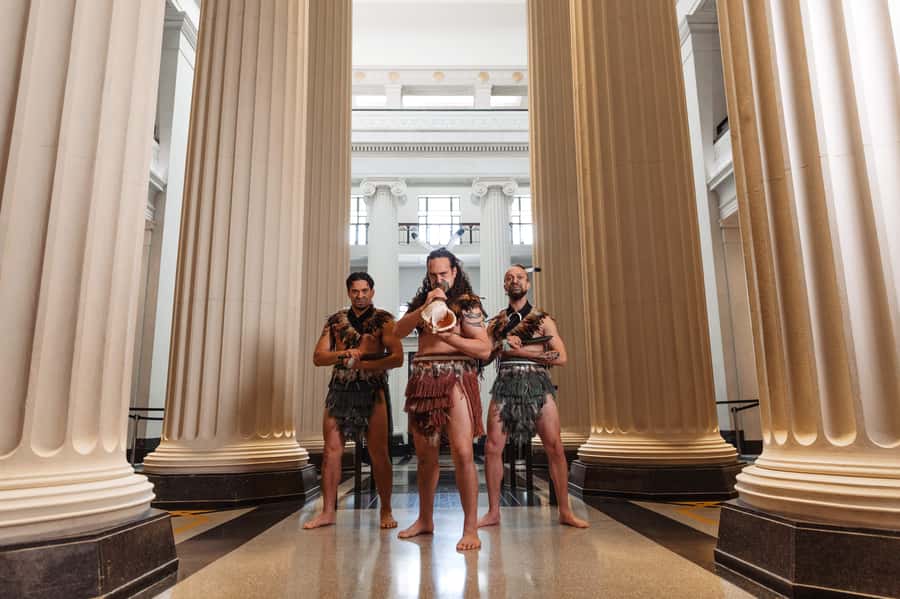
The museum ticket is not just an add-on. It is what makes the $37 price easier to justify.
Auckland Museum covers natural history, New Zealand heritage, and Māori taonga. You can spend time with displays about how New Zealand formed, its animals, and its distinctive environment, then connect those subjects with the cultural material presented in Living Taonga.
The museum is described as educational and easy to navigate on your own. You do not need to join a guided highlights tour to make the most of the building, although such tours cost extra. If you like to read labels and move at your own pace, the general admission ticket gives you room to shape the day around your interests.
Allow more than a quick visit. One visitor found that the museum required more than a few hours, and that is sensible advice. The performance itself is short, but the museum can fill the rest of your day.
The Māori Court and Pacific Galleries are temporarily closed for essential maintenance. This is the most important limitation to check before booking, especially if those areas are your main reason for visiting. The remaining museum displays still cover natural history and New Zealand heritage, but the closure reduces the cultural scope of the visit for now.
A practical way to plan your museum day
The museum is open from 10:00 to 17:00 on weekdays, except Christmas Day. On weekends, public holidays, and school holidays, it opens from 09:00 to 17:00. It stays open late on Tuesdays until 20:30.
Because the cultural performance has set starting times and bookings are essential, check the available session before you make your wider plan. I would arrive at least 20 minutes before the show. That gives you time to reach the museum, handle admission, and find the performance area without rushing.
A sensible order is:
- Arrive early and enter Auckland Museum.
- Check the time and location of Living Taonga.
- Attend the 30-minute performance.
- Spend the remaining hours with the museum exhibits.
- Use the on-site café if you need a break.
The ticket is valid for one day, so you have flexibility within the museum’s opening hours. Food and drinks are not included, although the museum has an on-site café. One detailed account praised its fresh food and coffee, making it a practical place to pause during a longer visit.
Large bags and luggage are not allowed. Avoid arriving with your main suitcase or bulky day pack. This is particularly useful to know if you are visiting Auckland between hotels or heading to the airport.
More Maori cultural experiences near Auckland:
- Auckland: All Blacks Experience Guided Cultural Tour
★ 4.7 · 453 reviews - All Blacks Experience: Interactive Guided Cultural Tour
★ 4.5 · 228 reviews - Auckland: Rotorua Wai-O-Tapu, Te Puia with Haka
★ 4.9 · 161 reviews - From Auckland: Rotorua Māori Village & Activity Combinations
★ 4.7 · 125 reviews
Getting to Auckland War Memorial Museum
The meeting point is Auckland War Memorial Museum, Tamaki Paenga Hira, in Parnell. From central Auckland, the museum is about a 30-minute walk or a five-minute drive.
Public transport makes the museum easy to reach, and driving is also possible. There are two levels of secure parking on site. You can also find free parking in Auckland Domain for up to three hours, though a short museum visit would not make the best use of this ticket.
The building’s location in Auckland Domain gives you a straightforward way to combine the museum with time outdoors, although the experience itself is centered on the museum and performance. If you are walking from central Auckland, allow enough time for the uphill route and your early arrival.
The museum is wheelchair accessible. Wheelchairs are available on site when free, but they cannot be reserved in advance. If you need one, arrive with enough time to ask about availability.
Is $37 good value?
At $37 per person, this is a reasonable Auckland cultural outing if you plan to stay most of the day. General museum admission and the Māori Cultural Experience are included, and the museum can occupy several hours beyond the performance.
The calculation changes if you only want the show. A past price comparison put museum admission at $25 and the performance add-on at $20, with concern that the combined cost felt high for a 30-minute presentation. Current pricing is $37 for the combined experience, so the value depends heavily on how much museum time you use.
I would book it for:
- A first visit to Auckland.
- Anyone wanting an introduction to Māori traditions before exploring New Zealand.
- Families and mixed-interest groups, since the museum offers more than one subject.
- People who prefer an educational performance to a purely theatrical show.
- Anyone with several free hours in Auckland.
I would think twice if you have already spent a full day at Auckland Museum, mainly want Pacific collections, or cannot stay long. The temporary closure of the Māori Court and Pacific Galleries is also a real factor, not a footnote.
What makes the performance especially worthwhile
The strongest part of Living Taonga is its combination of beauty and explanation. The singing is central, and the performers use strong voices, chants, and precise movement to hold the room.
The performance also has a welcoming tone. The narration includes humor, and the artists are available in a friendly way after the show. That helps keep the experience approachable without turning it into a shallow show for tourists.
You may find the performance moving, entertaining, and meaningful in equal measure. Its educational value is especially useful if you are new to Māori culture. Rather than expecting you to recognize symbols or understand the language, the presentation gives you a basic guide to what the performers are doing.
One fair criticism is that the cultural setting could use more historical background before the performance begins. If you want a fuller account of Māori history, the museum exhibits will help, but you should allow time to read and explore after the show.
What to see after the cultural session
After Living Taonga, use the museum admission to broaden the picture.
The natural history displays explain New Zealand’s unusual environment and animal life. These exhibits give useful context for a country that developed in relative isolation, and they help explain why the natural world is such an important part of New Zealand’s identity.
The New Zealand heritage displays then shift the focus toward the country’s people and development. You can take the performance’s introduction to Māori culture and place it beside wider displays about Aotearoa New Zealand.
The museum’s taonga collections are particularly relevant after Living Taonga, even with the Māori Court and Pacific Galleries temporarily closed. Check current access on the day, because maintenance work affects those specific areas.
Do not try to rush every room. Pick the subjects that interest you, take a café break, and return to the exhibits you want to understand better. The one-day ticket works best as permission to take your time rather than as a reason to race through the building.
Who should book Living Taonga?
I would recommend this to you if you want a respectful, accessible starting point for learning about Māori culture. The performance gives you music, movement, and a clear introduction to the haka, while the museum lets you continue learning at your own pace.
It is also a strong choice when you need one Auckland activity that can fill a large part of the day. The museum gives the outing substance, and the performance provides a scheduled highlight.
You may prefer another option if you want a long guided tour, a performance lasting several hours, or guaranteed access to the Māori Court and Pacific Galleries. This is a compact cultural presentation joined to a large museum, not an all-day guided study of Māori history.
The 4.5 rating from 59 reviews reflects the experience’s strongest qualities: excellent singing, lively performance, friendly artists, clear narration, and a worthwhile museum visit. The most useful advice is simple: arrive early, book the session, and plan to stay long enough for the museum admission to earn its keep.
FAQ
How long does the Māori Cultural Experience last?
The cultural performance lasts about 30 minutes. Your museum admission remains valid for the full day.
What does the Māori performance include?
It includes traditional waiata, poi, storytelling, dance, chants, and an explanation of the origins and meaning of the haka.
Is Auckland Museum admission included?
Yes. The ticket includes general admission to Auckland Museum as well as the Living Taonga Māori Cultural Experience.
What are the museum opening hours?
The museum is open from 10:00 to 17:00 on weekdays and from 09:00 to 17:00 on weekends, public holidays, and school holidays. It is closed on Christmas Day and stays open until 20:30 on Tuesdays.
Are the Māori Court and Pacific Galleries open?
No. Those galleries are temporarily closed for essential maintenance work.
Is the experience wheelchair accessible?
Yes, the museum is wheelchair accessible. Wheelchairs are available on site subject to availability, and they cannot be reserved ahead of time.
Can I cancel or pay later?
You can cancel up to 24 hours before the activity for a full refund. Reserve now and pay later is also available, subject to the booking conditions.
Should you book it?
Book this experience if you want a concise, well-explained introduction to Māori performance followed by several hours of museum time. At $37, it offers good value when you use the full-day admission, and the performance’s treatment of waiata, poi, and haka gives the visit a clear cultural focus.
Check the temporary gallery closures first. If you accept that limitation, arrive early, keep your schedule open, and treat Living Taonga as the beginning of your museum visit rather than the whole event.
More Museums in Auckland
- Explore gardens & galleries filled with incredible art, Matakana
★ 5.0 · 186 reviews - Auckland: Maritime Museum Entry Ticket
★ 4.6 · 29 reviews - Gallery Highlights Tour and General Admission
★ 4.5 · 14 reviews - Private Night Tour of Auckland, Sky Tower Bar, Bridge & Museum
★ 5.0 · 8 reviews
Just added around Auckland
- Heke Brewery and Distillery Tour in Waiheke Island with samples★ 4.5 · 3 reviews
- Hobbiton Movie Set Guided Day Tour with Lunch from Auckland★ 5.0 · 3 reviews
- London Routemaster Double Decker Auckland Discovery★ 5.0 · 3 reviews
- Auckland: Full-Day Fishing Charter (7 am – 4 pm)★ 4.3 · 3 reviews
- Auckland: 36 min scenic helicopter flight – Coast to Coast★ 5.0 · 3 reviews
- Boutique Waiheke Island Wine, Gin and Food Tour★ 5.0 · 3 reviews
- Auckland City Highlights Full Day Tour★ 4.6 · 3 reviews
- Coromandel Peninsula Discovery – Private Tour From Auckland★ 5.0 · 3 reviews
Maori Cultural Tours, compared.
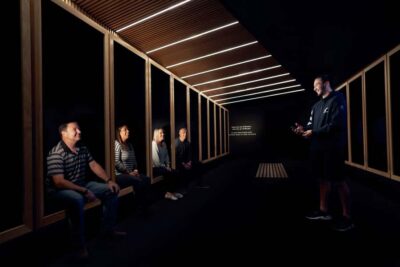

All Blacks Experience: Interactive Guided Cultural Tour
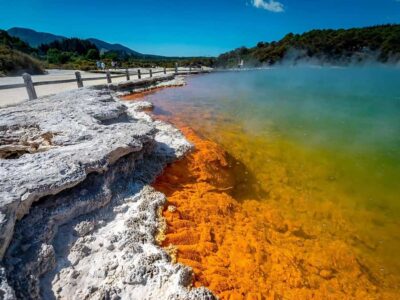
Read our review →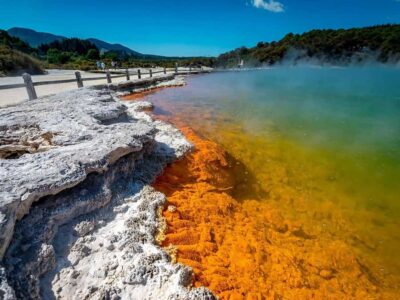
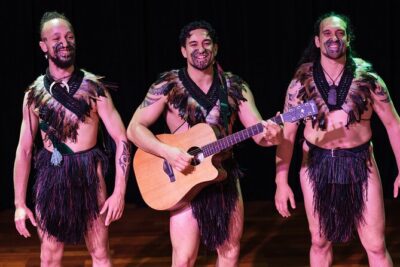
Māori Cultural Experience & Auckland Museum General Admission
Read our review →

Ex Auckland: Rotorua Māori Village with Haka and Hot Springs
Read our review →
Browse the lists this tour appears in