
Reviewed · KIWI BIRD & WILDLIFE TOURS
Guided Tour at Pukorokoro Shorebird Centre
Thousands of shorebirds gather along the Pukorokoro Shorebird Coast, and this 90-minute guided walk gives you a far better chance of understanding what you are seeing than a quick stop with your own binoculars. You will visit the Robert Findlay Wildlife Reserve and its bird hides, with telescopes aimed across the estuary.
I like the careful timing around the tides, which helps put birds in view, and I like the human side of the visit. Guides such as Chelsea and Trudy bring warmth and clear explanations to subjects that can seem daunting at first. The main consideration is that this is an outdoor walk, so poor weather can cancel it, and visitors with very limited mobility may find it difficult.
In This Review
- Key points at a glance
- Why Pukorokoro is worth your time
- Walking the Robert Findlay Wildlife Reserve
- Telescopes, tides, and better bird watching
- The kuaka and the wider migration story
- A guide makes the difference
- What the $31.03 price gives you
- Who will enjoy this tour most
- How to prepare for the reserve
- Booking flexibility and weather plans
- Should you book the Pukorokoro Shorebird Centre tour?
- FAQ
- How long does the guided tour last?
- Where does the walking tour take place?
- Are telescopes provided?
- Do I need to bring binoculars?
- Is water included?
- Are snacks included?
- Is this a private tour?
- What happens if bad weather cancels the tour?
Key points at a glance
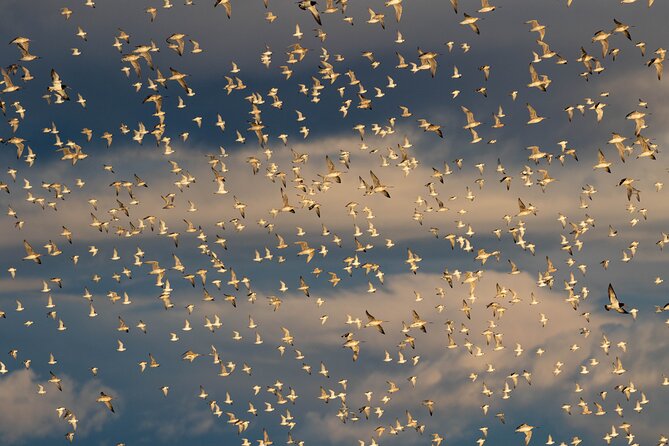
- Thousands of shorebirds in one reserve: Use Centre telescopes to look across the Robert Findlay Wildlife Reserve and its bird hides.
- Tide-aware scheduling: The tour is timed so birds are more likely to be gathered in feeding areas.
- Migration brought to life: Learn about the kuaka, or bar-tailed godwit, and its remarkable long-distance journey.
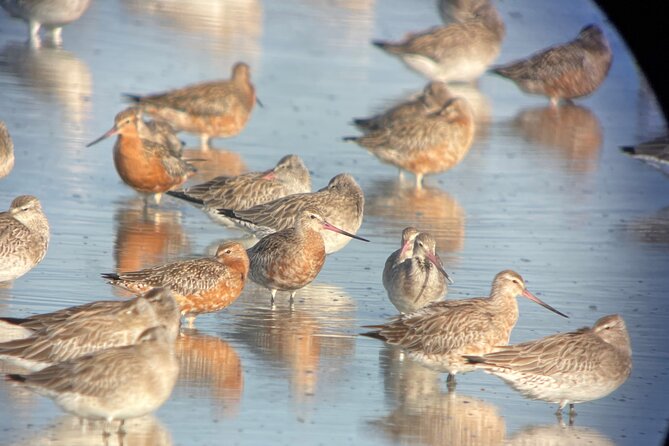
- Useful bird identification: Guides can help you tell a wrybill from a godwit and spot red knots among the flock.
- A private 90-minute experience: Only your group takes part, making it easier to ask questions and set your own pace within the tour.
- A conservation-focused visit: Your fee supports the Pukorokoro Miranda Shorebird Centre and its work protecting the wetland.
Why Pukorokoro is worth your time
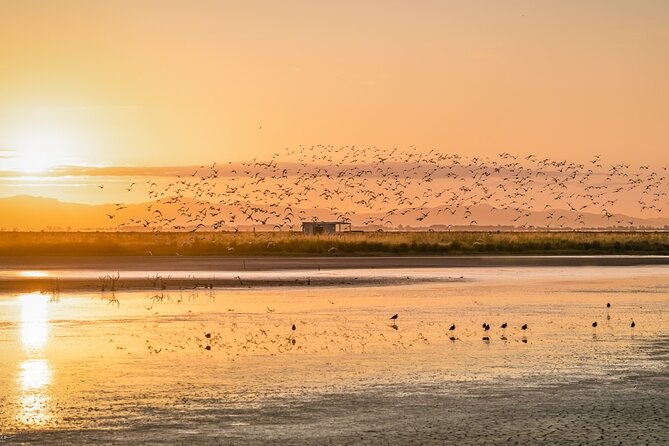
Many estuaries look quiet at first glance. At Pukorokoro, the mudflats can seem empty until a telescope brings them close. Then the scene changes: thousands of birds appear, feeding, resting, and moving in small groups across an internationally significant wetland.
That shift in perspective is the real point of the tour. You are not simply ticking off a bird sighting. You are learning how an estuary works and why its mud, tides, and open feeding areas matter to birds that travel extraordinary distances.
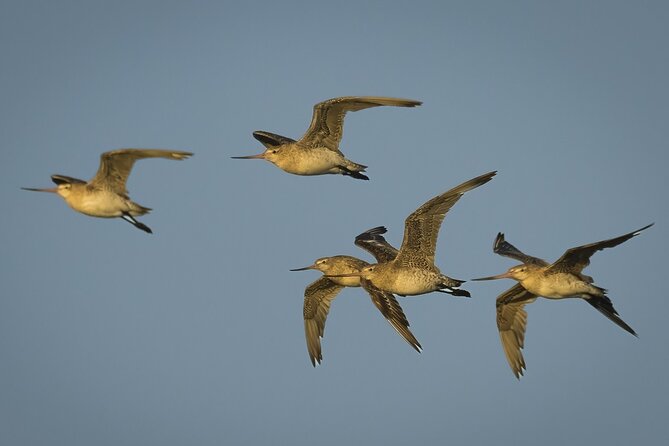
The centre uses the Māori word manu for birds, and the tour connects local wildlife with a much wider Pacific migration route. The kuaka, or bar-tailed godwit, is the star for good reason. It is hard to grasp the scale of its journey from a label or a display, but seeing large numbers of kuaka gathered together gives the subject weight.
I also appreciate that the visit does not pretend every bird will be obvious. Shorebirds are often small, brown, and distant. A guide helps you turn that blur into useful details: the shape of a bill, the way a bird feeds, or the difference between a wrybill and a godwit.
More kiwi and wildlife encounters near Auckland:
- Auckland (Tawharanui): Wild Kiwi Bird Spotting Encounter
★ 4.9 · 78 reviews - Sheep World Country Tour from Auckland
★ 5.0 · 67 reviews - Nocturnal Wonders Tawharanui Kiwi Spotting and Stargazing Tour
★ 5.0 · 23 reviews
Walking the Robert Findlay Wildlife Reserve
The whole outing takes place at the Robert Findlay Wildlife Reserve. You walk around the reserve and continue to the bird hides, stopping to look through telescopes at birds in their natural setting.
This is a simple route, but the setting does the heavy lifting. The reserve gives you room to look across the estuary rather than viewing birds in an enclosed collection. That matters if you want to understand shorebirds as wild animals shaped by tides, mudflats, weather, and seasonal movement.
The hides provide useful viewing points. With the telescopes supplied on the tour, you do not need to arrive with expensive equipment. Still, bring binoculars if you own a pair. One of the best ways to enjoy a flock is to use the telescope for close views, then scan the wider area with binoculars to see how many birds are spread around it.
The walk lasts about an hour and a half, so this is not a quick ten-minute viewing stop. The time allows the guide to identify birds, explain their habits, and answer questions without rushing from one viewpoint to the next. You should expect a relaxed pace rather than a physically demanding hike, although the operator does not recommend it for people with very limited mobility.
Telescopes, tides, and better bird watching
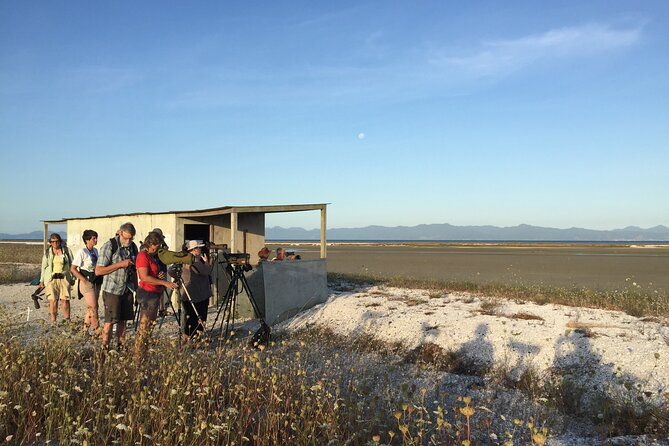
The supplied telescopes are one of the strongest practical features. Shorebirds often gather at a distance, and a standard phone camera will not tell you much. The telescope gives you a proper look at plumage, legs, bills, and feeding behavior.
The timing is just as important. The tour is arranged around the tides, when birds are more likely to be in the right areas. This does not promise a fixed list of species, since wild birds do not follow a script, but it improves the basic odds of seeing a large gathering.
You will learn that bird watching is partly about patience and partly about knowing where to look. A guide can point out a mixed group and help you separate the species. The difference between a wrybill and a godwit may be easy for an expert and invisible to a first-time visitor. With a little help, those names begin to match real birds.
The same applies to red knots and other migratory species. You might see a wide spread of shorebirds rather than one dramatic close-up. That is still valuable. The sight of thousands of birds using the same wetland says more about the importance of the estuary than a single rare sighting would.
The kuaka and the wider migration story
The tour gives special attention to the kuaka, also known as the bar-tailed godwit. Its migration is one of the reasons this coast matters, and the guide explains the demands these birds face as they move between distant feeding and breeding areas.
You do not need a background in ornithology to follow the story. The best part is the connection between the bird in front of you and the larger route it travels. A flock resting on the mudflats is not just local wildlife. It is part of a seasonal system that depends on safe coastal wetlands along the way.
That conservation message feels more convincing when you are looking at the birds themselves. The centre is not asking you to care about an abstract cause. It is showing you a working wetland, the animals using it, and the challenges created when such places are damaged or disturbed.
This is also where the tour earns its educational value. You learn about birds, but you also learn why estuaries can be easy to overlook and still vital. The mud and shallow water may not look dramatic, yet they provide food and shelter for large numbers of shorebirds.
A few more Auckland tours and experiences worth a look
- Hobbiton & Waitomo Caves Guided Day Trip from Auckland incl lunch
★ 5.0 · 2,677 reviews - Hobbiton & Waitomo Caves Guided Tour from Auckland with Lunch
★ 4.5 · 796 reviews - From Matamata: Guided Hobbiton Experience with Bus Transfers
★ 4.9 · 523 reviews - Auckland: All Blacks Experience Guided Cultural Tour
★ 4.7 · 453 reviews
A guide makes the difference
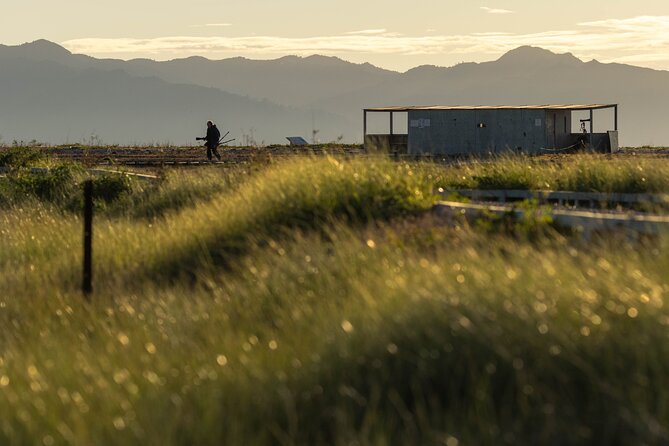
A good guide turns a quiet reserve into an active lesson. Chelsea has led tours with a friendly, patient approach, answering questions and sharing facts about the birds in view. Trudy has also guided relaxed, informative walks and helped visitors get more from time spent watching godwits and red knots.
The important point is not a performance or a packed lecture. The tour works best when the guide responds to what your group is seeing. If a bird is hard to identify, you can ask. If you want more detail about migration or conservation, you can follow that thread.
The private format helps here. Only your group takes part, so you are not competing with a large crowd for telescope time or trying to hear a guide over several other conversations. A private tour does not mean the birds will come closer, but it does give you a more personal way to use the viewing equipment and ask questions.
You should still expect the guide to work within the conditions of the day. Weather, tides, and bird behavior all matter. This is nature watching, not a staged show, and part of the appeal is seeing what the estuary offers at that time.
What the $31.03 price gives you
At $31.03 per person, the tour is priced as a focused introduction to the reserve rather than a full-day wildlife outing. You get about 90 minutes with a guide, use of telescopes, and a walk through the Robert Findlay Wildlife Reserve.
I think the fee makes good sense if you are new to shorebird watching. Buying or carrying specialist equipment is not necessary, and the guide saves you the frustration of staring across the estuary without knowing what to look for. The conservation connection adds value too, since your visit supports an organisation committed to protecting the area.
The value is more limited if you already know the reserve well and have your own telescope or strong bird-identification skills. In that case, you may prefer to spend longer at the centre independently. Even then, a guided walk can be worthwhile if you want help with species identification or a clearer explanation of the migration story.
Water and snacks are not included. You can refill bottles at the centre, and staff can recommend local places to eat. Bring what you need for the walk rather than expecting refreshments to be part of the experience.
Who will enjoy this tour most
This is an easy choice for bird enthusiasts, but you do not need to be an expert. I would recommend it to anyone who enjoys quiet outdoor settings, wants to learn about New Zealand wildlife, or is looking for an activity that feels different from a standard city attraction.
Families and mixed-interest groups may also find it useful because the guide gives the visit structure. You can arrive without knowing a wrybill from a godwit and still leave with a basic grasp of the species and the wetland.
The tour suits conservation-minded visitors especially well. You see a real habitat, hear about the pressure on migratory birds, and support the centre at the same time. It is a better fit for people who enjoy observation and explanation than for anyone seeking action, close animal encounters, or a quick photo stop.
Mobility deserves a straightforward mention. Most people can take part, but the operator does not recommend the experience for those with very limited mobility. Since the activity includes walking around the reserve and reaching bird hides, check your own comfort level before booking.
How to prepare for the reserve
Bring binoculars if you have them. The centre provides telescopes, but binoculars let you follow birds outside the telescope’s narrow view and make it easier to keep watching while another person uses the scope.
Plan for outdoor conditions. The experience requires good weather, and poor weather can lead to a different date or a full refund. Comfortable walking clothing is sensible, though the supplied information does not specify a dress code or particular equipment list.
Carry a refillable water bottle. You can top it up at the centre, while snacks are your responsibility. If you want to eat afterward, the staff can point you toward local eateries.
The mobile ticket is convenient for keeping the booking on your phone. Confirmation arrives when you book, and the private format means you are signing up your own group rather than joining a mixed public party.
Booking flexibility and weather plans
You can cancel for a full refund if you do so at least 24 hours before the start time. Changes or cancellations made inside that 24-hour window are not accepted for a refund, and the cut-off follows local time.
Weather is the main exception to plan for. If conditions force cancellation, you will be offered another date or a full refund. That policy is useful here because the quality of a shorebird visit depends on being able to walk outside and see across the estuary.
Should you book the Pukorokoro Shorebird Centre tour?
Book it if you want a short, well-focused introduction to New Zealand shorebirds, especially if you like the idea of seeing thousands of birds rather than chasing one staged encounter. The telescopes, tide-aware timing, private format, and guide-led identification make the $31.03 fee reasonable.
I would be less likely to choose it for a visitor with very limited mobility or for someone wanting a fast activity with guaranteed close views. Birds remain wild, distant, and weather-dependent.
For everyone else, this is a thoughtful use of 90 minutes. Bring binoculars, carry water, and arrive ready to look carefully. The reward is not only the spectacle of a huge flock. It is learning why this quiet estuary matters and leaving able to recognize at least a few of the birds that depend on it.
FAQ
How long does the guided tour last?
The tour lasts approximately 1 hour and 30 minutes.
Where does the walking tour take place?
The walk takes place at the Robert Findlay Wildlife Reserve, including the reserve’s bird hides.
Are telescopes provided?
Yes. Use of telescopes is included in the tour.
Do I need to bring binoculars?
Binoculars are not required, since telescopes are provided, but bringing your own pair can help you scan the wider area and watch birds while the telescope is in use.
Is water included?
Bottled water is not included. You can refill water bottles at the centre.
Are snacks included?
No. Snacks are not included, but the centre can recommend local eateries.
Is this a private tour?
Yes. Only your group participates in the activity.
What happens if bad weather cancels the tour?
If poor weather causes cancellation, you will be offered a different date or a full refund. You can also cancel for a full refund if you do so at least 24 hours before the start time.
Just added around Auckland
- Heke Brewery and Distillery Tour in Waiheke Island with samples★ 4.5 · 3 reviews
- Hobbiton Movie Set Guided Day Tour with Lunch from Auckland★ 5.0 · 3 reviews
- London Routemaster Double Decker Auckland Discovery★ 5.0 · 3 reviews
- Auckland: Full-Day Fishing Charter (7 am – 4 pm)★ 4.3 · 3 reviews
- Boutique Waiheke Island Wine, Gin and Food Tour★ 5.0 · 3 reviews
- Auckland: 36 min scenic helicopter flight – Coast to Coast★ 5.0 · 3 reviews
- Auckland City Highlights Full Day Tour★ 4.6 · 3 reviews
- Twilight Wild Kiwi Bird Encounter Private Tour★ 5.0 · 3 reviews
Kiwi Bird & Wildlife Tours, compared.

Auckland (Tawharanui): Wild Kiwi Bird Spotting Encounter
Read our review →
Nocturnal Wonders Tawharanui Kiwi Spotting and Stargazing Tour
Read our review →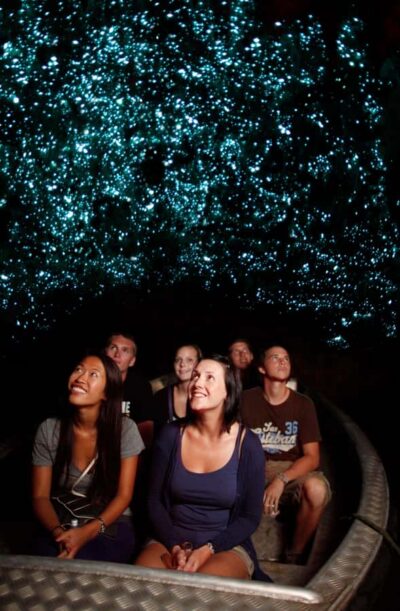
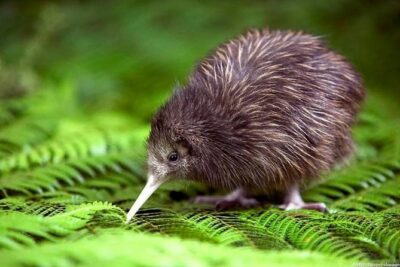
Private tour from Auckland – Waitomo Glowworm Caves, Zealong Tea & Kiwi Bird
Read our review →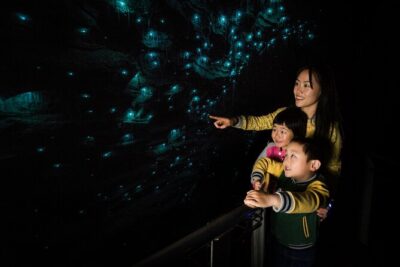
Waitomo Glowworm Caves and Kiwi House Small Group from Auckland
Read our review →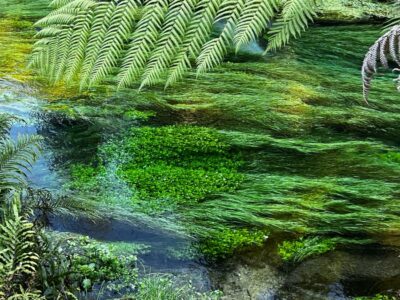
Te Puia Maori Haka, Kiwi Birds, Redwood & Blue Springs
Read our review →
Sheep Shearing and Auckland City Highlights Tour with Lunch
Read our review →Browse the lists this tour appears in