
Reviewed · AUCKLAND VOLCANO TOURS
Day sea kayak tour Rangitoto Island
Rangitoto is Auckland’s youngest and largest volcano, and this sea-kayak-and-hike tour gives you two fine ways to reach it. You paddle across the Waitemata Harbor, walk through the island’s bush to the summit, then return to the shore for a hearty Kiwi BBQ before kayaking back to St. Heliers.
I like the small groups, with no more than eight people, and the guides’ attention to safety and local nature. I also like the rhythm of the day: upper-body exercise on the water, a leg-stretching summit walk, a hot meal, then the return paddle. The catch is simple: this is a real workout, with roughly 10 kilometers of paddling and steep sections on the hike.
In This Review
- Key points to know before you book
- Why kayaking to Rangitoto feels different
- The Waitemata Harbor crossing
- Landing at Rangitoto Wharf
- The summit views over Auckland
- The shore-side Kiwi BBQ
- The return paddle to St. Heliers
- How hard is the tour?
- Guides, safety, and conservation
- What the $152.04 price includes
- What to bring and how to prepare
- Is this Rangitoto tour right for you?
- FAQ
- Is previous kayaking experience required?
- How long does the tour last?
- How much paddling should I expect?
- How difficult is the walk to the summit?
- What is included in the price?
- Where does the tour start?
- What happens if the weather is poor?
Key points to know before you book
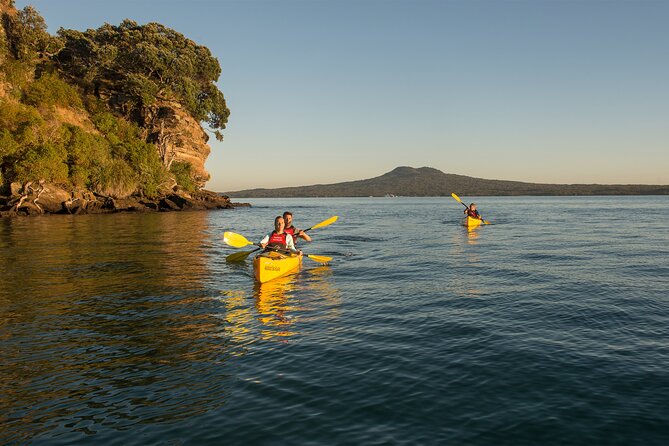
- Rangitoto from the water: Paddle across the sparkling Waitemata Harbor instead of taking the usual ferry.
- A summit with a payoff: The one-hour walk reaches wide views over Auckland, the Hauraki Gulf, beaches, and nearby bays.
- Beginner-friendly instruction: Guides provide a full kayak and safety briefing, so previous experience is not required.
- A small, social group: The maximum group size is eight, useful for personal instruction and a friendlier outing.
- Food at the right moment: Coffee or tea may be served on the island, followed by a catered Kiwi BBQ after the hike.
- Fitness matters: Calm water can make the paddle pleasant, but wind, weather, and the long return crossing can change the effort required.
Why kayaking to Rangitoto feels different
Most people see Rangitoto from a ferry, the Auckland waterfront, or a city lookout. From a kayak, you approach at water level, with the volcano growing slowly ahead of you and Auckland receding behind. That change in scale is the main reason to choose this trip.
The launch point is connected with Auckland Sea Kayaks, with pickup offered from central Auckland on request. The stated city pickup location is around the Auckland Museum circuit in Parnell, and the activity starts at 8:30 a.m. The tour also operates from St. Heliers Bay, where the return ends.
Before you paddle out, your guide gives you instruction on handling the kayak, basic paddling, and safety. That matters if you have never used a sea kayak. The guides are experienced sea kayakers, and the small group allows them to keep an eye on how everyone is managing.
You should not mistake beginner-friendly for effortless. You may be new to kayaking, but you still need to paddle for a substantial distance. One detailed account puts the full crossing at close to 10 kilometers, while another describes two to three hours of total paddling. The exact time depends on conditions, the group, and the route used that day.
More volcano tours in Auckland:
- Sunset kayak tour to Rangitoto Island
★ 5.0 · 168 reviews - Half-Day Volcano Tour from Auckland
★ 5.0 · 124 reviews - Auckland: Inner-City Glowworm Experience in Ancient Volcano
★ 4.8 · 109 reviews
The Waitemata Harbor crossing
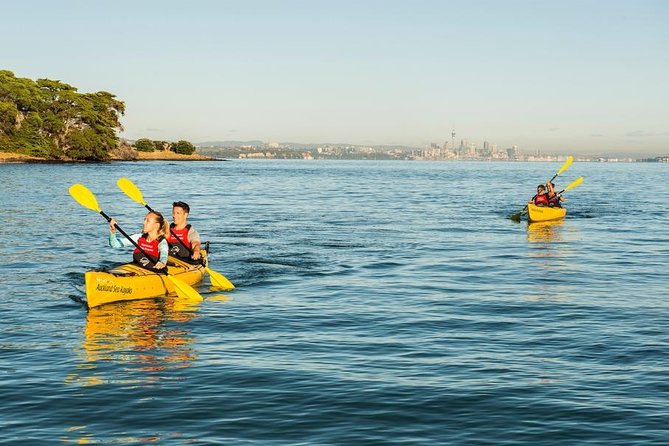
The harbor means sparkling waters, and on a calm morning the name makes sense. The crossing is the physical heart of the trip. You are not simply being transported to Rangitoto. You are working your way there, stroke by stroke, with the city, islands, and harbor traffic around you.
The water can be calm and leisurely, but conditions are not guaranteed. One guide changed the destination to Browns Island, also known as Motukorea, after checking the forecast and incoming rain. That is a useful sign of sensible operation. The company may substitute another volcanic island when conditions make the Rangitoto crossing less suitable.
You may see Little Blue Penguins or Cook’s Petrels, although wildlife sightings are never promised. Keep your eyes open during quieter stretches of paddling, especially near the island and along the harbor. The guide’s local knowledge adds meaning to what could otherwise be just a long stretch of water.
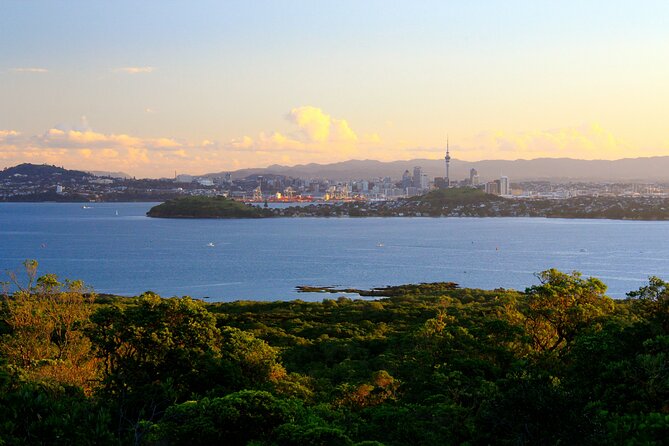
The crossing also gives you a good feel for Auckland’s geography. You see the city skyline from offshore and gain a sense of the surrounding beaches and bays. It is a more active and grounded view than a quick photo from a lookout.
Landing at Rangitoto Wharf
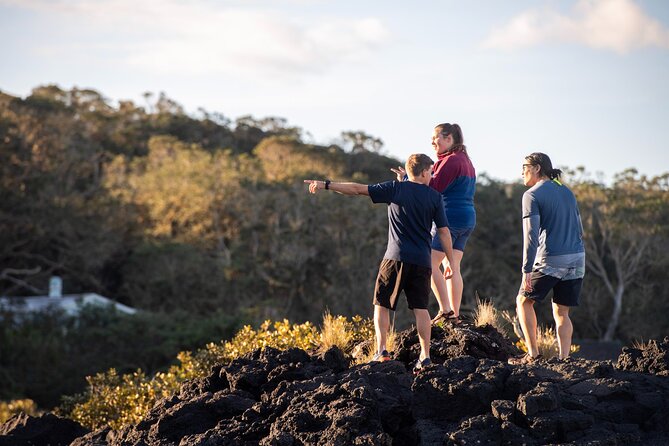
The kayaks are pulled up near Rangitoto Wharf. From here, the outing changes pace. You leave the water behind and begin the walk toward the summit, with about an hour set aside for the climb and island exploration.
Rangitoto is a volcanic island, and the walk includes inclines. The route is not described as technically dangerous, but several accounts make clear that the climb can be strenuous at times. If you are comfortable with a vigorous walk, you should find it manageable. If hills are difficult for you, this is the part of the day to take seriously.
The island’s bush-clad slopes and volcanic setting give the walk more interest than a simple stair climb. Your guide points out plant life and birds, and explains the area’s natural and human past. Daniel, Chloe, Eric, Bennett, and Richard are among the guides praised for clear instruction, friendly company, and good judgment.
Plan on moving at the group’s pace rather than racing to the top. There is value in stopping to look around, and the walk is meant to be informative as well as active. Wear footwear that can handle uneven ground, and clean it carefully before the trip to help protect the islands.
The summit views over Auckland
The summit is the reward for the paddle and climb. From the top, you get broad views over Auckland, the Waitemata Harbor, the Hauraki Gulf, and the surrounding beaches and bays. On a clear day, the city skyline and the Waitakere Ranges help frame the view.
This is where the combination of activities earns its keep. The water shows you Auckland from one angle, while the summit gives you the high view. You see the route you have paddled and understand how the islands sit around the city.
The walk may feel easy to one person and demanding to another. Several accounts describe the incline as vigorous but doable, while one calls the hiking portion strenuous at times. I would treat the summit walk as a proper one-hour hike, not a casual stroll.
A snack at the top may be provided for energy, and coffee or tea may be served on the island. The exact food timing can vary, but the general plan gives you a break between the paddle out and the return journey.
More sea kayaking around Auckland:
- Auckland: Night Kayak Tour in Glowing Bioluminescent Waters
★ 4.9 · 259 reviews - Bioluminescence Kayak Tour – Est. 1994
★ 4.0 · 187 reviews - Clearyak hire at Goat Island Marine Reserve
★ 5.0 · 80 reviews - Auckland: Bioluminescence Kayak Tour with Guide
★ 4.4 · 42 reviews
The shore-side Kiwi BBQ
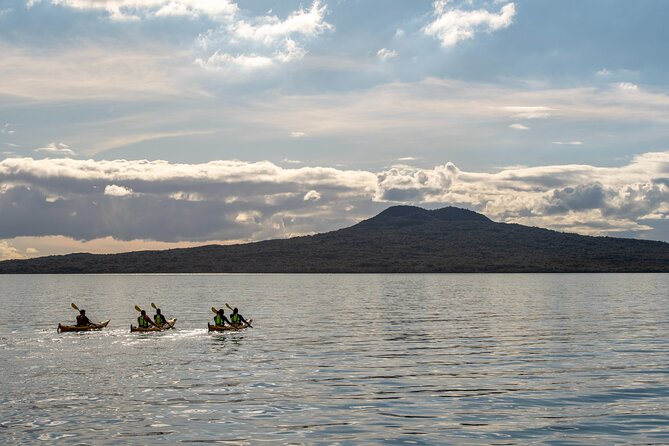
After the summit walk, you return to the water’s edge for the catered BBQ. This is a smart part of the schedule. You have used your arms on the crossing and your legs on the climb, so a hot meal feels useful rather than decorative.
The food has received mostly warm praise, with steaks, cookies, and a healthy Kiwi-style meal mentioned among the highlights. One account specifically appreciated steaks grilled on the beach, while another enjoyed date and coconut cookies. Coffee and tea are included as well.
Food quality has not been perfectly consistent for everyone. One account found the picnic lunch below expectations, so I would not book this solely for the meal. Think of the BBQ as a welcome, practical feature that adds to the outing, not as a restaurant lunch.
A swim may be possible if conditions and timing allow. Bring suitable swimwear if that appeals to you, but the day’s core activities remain kayaking and hiking. The meal and shore stop also provide a chance to dry out, talk with the group, and gather energy for the return paddle.
The return paddle to St. Heliers
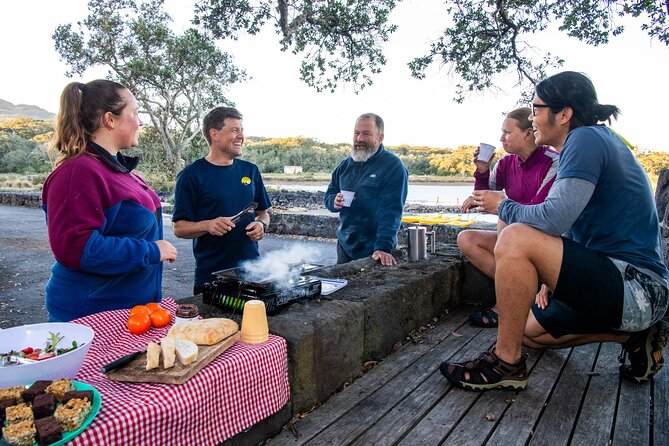
The paddle back can feel different from the outward crossing. You are likely more familiar with the kayak by then, but you may also be tired from the summit walk. The lunch break helps, yet you still need to put in the work.
One account describes paddling home in the dark as exciting, while another notes interesting weather on the return. The published start time is 8:30 a.m., and the full activity lasts about six and a half hours, so the finish should normally fall in the afternoon. Still, daylight, weather, and the day’s schedule can affect how the final section feels.
Your guide watches the conditions and manages the route. That is especially important across a busy harbor channel, where wind and water movement can make the crossing harder. You should be ready to follow instructions, stay with the group, and accept a changed destination if safety requires it.
The tour ends back at the meeting point or St. Heliers area, depending on the arranged pickup and launch plan. Central Auckland pickup and drop-off are offered on request, which is useful if you are staying in the city and do not want to arrange your own transport.
How hard is the tour?
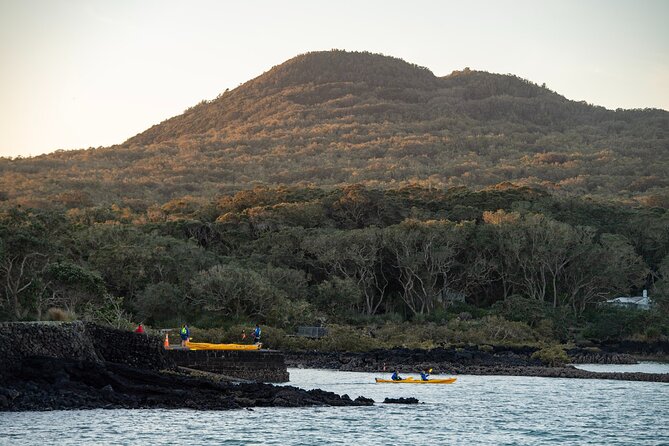
The company says no kayaking experience is needed, and the safety briefing supports that. The more important requirement is moderate physical fitness.
You should be prepared for:
- Roughly 10 kilometers of paddling in total
- Two to three hours on the water, depending on conditions and pace
- About one hour of walking to the summit
- Steep or vigorous inclines
- A return paddle after the hike and meal
That is a full active day. It is not a good choice if you want a gentle sightseeing trip with very little effort. It suits you if you enjoy outdoor exercise, can manage a sustained paddle, and are comfortable walking uphill.
Pairing people in kayaks can affect the experience. One negative account raised concerns about how paddling partners were matched and felt the guide did not provide enough help. Most of the available feedback praises the guides’ instruction and care, but this remains a fair consideration for solo participants or anyone nervous about sharing a kayak.
Guides, safety, and conservation
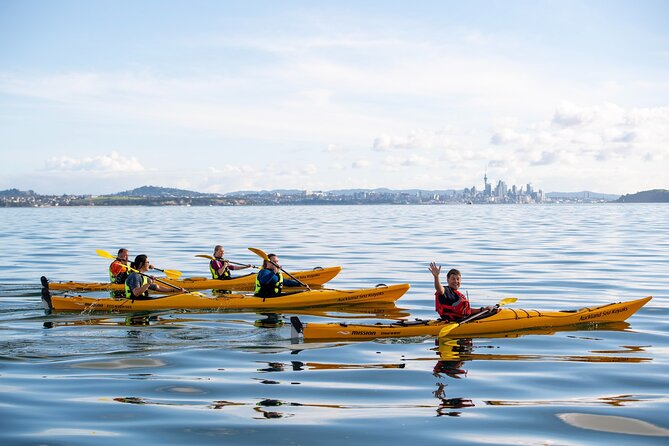
The guide can make or break a day on the water. Daniel is praised for explaining plant life and birds, while Eric is noted for calm instruction, organization, and safety. Chloe receives particular praise for friendly help and for keeping the day well paced. Bennett and Richard are also singled out for leading enjoyable trips.
The best guide quality here is practical judgment. When the forecast suggested rougher water, one guide changed the destination to Browns Island rather than forcing the Rangitoto plan. Browns Island offers its own volcanic summit, crater rim, and views across the Hauraki Gulf, and it is not reached by regular public transport.
You also play a role in protecting the islands. Before leaving the mainland, check your shoes, clothing, bags, and camping gear for rats, mice, ants, skinks, soil, and seeds. Clean your footwear and equipment, then seal bags so nothing can hide inside. These steps may seem fussy, but island ecosystems are easily damaged by pests and plant material.
What the $152.04 price includes
At $152.04 per person, this is not the cheapest way to see Rangitoto. The value comes from combining transport by kayak, equipment, instruction, guiding, a summit walk, food, and return travel in one six-and-a-half-hour outing.
You also receive a small-group format, with a maximum of eight people. That is meaningful on a water-based activity. You get more personal attention than you would on a large commercial excursion, and the group usually has a better chance to move at a shared pace.
The price includes top-quality sea-kayak equipment, experienced guides, a fully catered BBQ lunch, and coffee or tea. Pickup and drop-off between central Auckland and St. Heliers are offered on request. There are no listed extras that you must budget for during the tour.
I see the price as fair if you want a complete active day and would otherwise pay separately for transport, a guided island visit, equipment, and lunch. It is less appealing if you only want to reach Rangitoto and see the summit, since the ferry and self-guided walk would involve less time and effort.
What to bring and how to prepare
Clean outdoor gear is essential for the islands. Remove soil and seeds from footwear and clothing, inspect bags for insects or small animals, and close every bag securely.
You should also bring clothing suited to changing conditions, though the supplied information does not specify a required packing list. A swimsuit may be useful if you hope to swim. Food is provided, but bringing a small personal snack is sensible, especially since one person found the hike hungry-making and recommended extra energy food.
Expect to get wet or at least close to the water. Dress for an active day rather than a polished city outing. Comfortable walking footwear is important for the summit route, and a reasonable level of fitness will make the return crossing far more enjoyable.
Is this Rangitoto tour right for you?
Book it if you want Auckland sightseeing with real exercise attached. You get harbor views, a volcanic island, a summit walk, wildlife possibilities, a small group, and a BBQ in one well-filled day.
Skip it if you dislike sustained paddling, steep walks, or weather-dependent plans. Calm conditions can make the trip feel leisurely, but the distance remains substantial. Also remember that the destination may change to another island when the forecast calls for it.
At $152.04, I would choose this over a passive city tour if you have the fitness and time. The best reason to go is not simply reaching Rangitoto. It is seeing Auckland from the water, earning the summit view, and returning with a much clearer sense of how the city and its volcanic islands fit together.
FAQ
Is previous kayaking experience required?
No. The guides provide a full kayak and safety briefing, and the activity is described as suitable for people with little or no kayaking experience.
How long does the tour last?
The tour lasts approximately six hours and 30 minutes.
How much paddling should I expect?
You should be prepared for roughly 10 kilometers of paddling in total, or about two to three hours on the water, depending on conditions and the group’s pace.
How difficult is the walk to the summit?
The summit walk takes about one hour and includes inclines. A moderate level of physical fitness is required, and some sections may feel strenuous.
What is included in the price?
The price includes sea-kayak equipment, experienced guides, safety instruction, a catered BBQ lunch, coffee and/or tea, and pickup and drop-off between central Auckland and St. Heliers on request.
Where does the tour start?
The stated city pickup location is the Auckland Sea Kayaks city pickup location near the Museum Circuit in Parnell, Auckland. The listed start time is 8:30 a.m.
What happens if the weather is poor?
If poor weather causes the tour to be canceled, you will be offered a different date or a full refund. The destination may also change to another suitable island when conditions make Rangitoto less appropriate.
Just added around Auckland
- Heke Brewery and Distillery Tour in Waiheke Island with samples★ 4.5 · 3 reviews
- Hobbiton Movie Set Guided Day Tour with Lunch from Auckland★ 5.0 · 3 reviews
- London Routemaster Double Decker Auckland Discovery★ 5.0 · 3 reviews
- Auckland: Full-Day Fishing Charter (7 am – 4 pm)★ 4.3 · 3 reviews
- Boutique Waiheke Island Wine, Gin and Food Tour★ 5.0 · 3 reviews
- Auckland: 36 min scenic helicopter flight – Coast to Coast★ 5.0 · 3 reviews
- Twilight Wild Kiwi Bird Encounter Private Tour★ 5.0 · 3 reviews
- Auckland City Highlights Full Day Tour★ 4.6 · 3 reviews
Auckland Volcano Tours, compared.
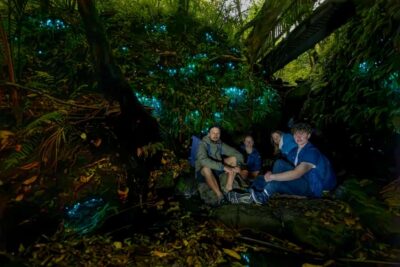
Inner-City Glowworm Experience in Ancient Volcano
Read our review →
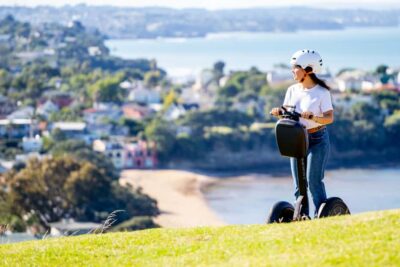
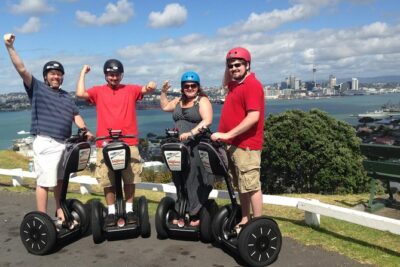
Guided Segway Tour to the summit of Mt Victoria in Devonport Auckland
Read our review →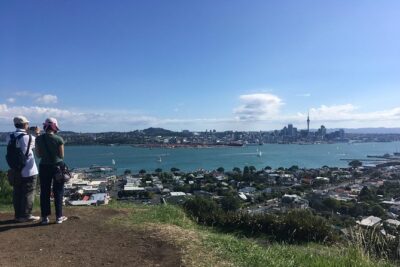
Volcanoes, Coasts, and Secret Spots Afternoon Tour in Auckland
Read our review →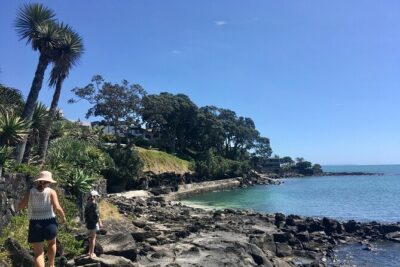
Browse the lists this tour appears in