
Reviewed · PIHA & WEST COAST BEACH TOURS
Beginner Surf Lesson at Te Arai Beach
A first wave can turn a beach day into a real New Zealand memory. Saltwater Eco starts you on the sand, where you learn safety, board handling, paddling, and the pop-up before heading into the water. Locke, Lydia, and Kirsty are among the instructors named for their calm, patient teaching.
I like the small maximum group of 12, which gives an instructor room to watch your technique instead of shouting general tips from shore. I also like that the lesson is timed around the tide, and that boards, wetsuits, photos, and videos are included in the price.
The main catch is practical: transport is not included, and the information uses both Te Arai and Omaha Beach when describing the location. Confirm the exact water access point before setting out, especially if you are arranging your own transport.
In This Review
- Key points for your first surf lesson
- Why Te Arai is a sensible place to learn
- What happens during the two-hour lesson
- The instructors make the biggest difference
- The beach and the beginner wave
- Boards, wetsuits, photos, and videos
- Is $49.03 good value?
- Who will get the most from this lesson?
- Timing, meeting point, and what to plan
- What the feedback tells me about the experience
- Should you book Saltwater Eco?
- FAQ
- How long does the beginner surf lesson last?
- Where does the activity meet?
- Is transport included?
- What equipment is provided?
- What will I learn?
- How many people can join the lesson?
- What happens if the weather is poor?
Key points for your first surf lesson
- The lesson begins on the beach: Learn safety, equipment use, paddling, and pop-up technique before entering the water.
- Groups are capped at 12: That is small enough for targeted help, though the amount of individual attention depends on the day’s turnout.
- The tide shapes the schedule: Lesson times are set around water conditions rather than chosen at random.
- Equipment is supplied: Your surfboard and wetsuit are included, so you do not need to rent them separately.
- Several instructors are praised for patience: Locke, Lydia, and Kirsty are named as especially reassuring for first-timers and children.
- Photos and videos are included: You receive a record of the lesson, including those first attempts on the board.
Why Te Arai is a sensible place to learn
The first thing I want from a beginner surf lesson is a forgiving setting. Te Arai and nearby Omaha Beach are presented as clean, sandy beaches with beginner-friendly waves, which matters far more than having an impressive view or a famous surf break. You need space to make mistakes, stand up slowly, and try again without feeling rushed.
This is also a useful choice if you are staying in Auckland and want an outdoor day trip. The beach is described as being within reach of central Auckland, but you must arrange your own transport. That gives you flexibility, though it also means you need to allow time for the journey and check the meeting instructions carefully.
The location information deserves a quick check before booking. The experience is titled for Te Arai and begins at 708 Te Arai Point Road, Te Arai 0975, while the description repeatedly refers to Omaha Beach. These places are associated with the same wider coastal area, but they are not interchangeable names when you are trying to find a meeting point. I would confirm which beach is being used on your date.
More west coast beach trips from Auckland:
- Afternoon Piha Beach and Rainforest Tour from Auckland
★ 5.0 · 807 reviews - Waitakere Ranges Wilderness Experience Tour from Auckland
★ 4.8 · 340 reviews - Piha Waitakere Rainforest Wine Tour from Auckland
★ 5.0 · 201 reviews
What happens during the two-hour lesson
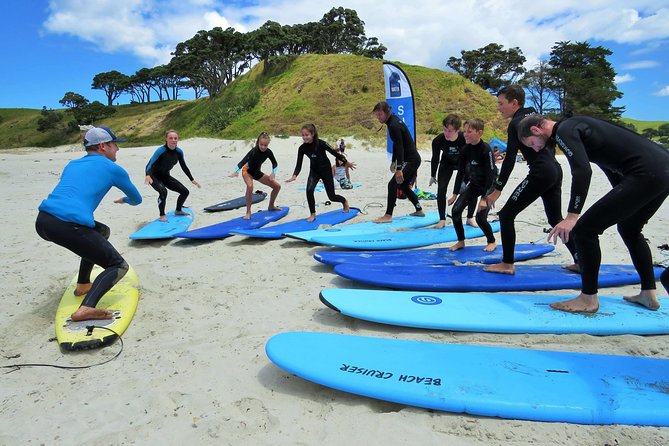
The lesson is built in a sensible order. You do not simply collect a board and walk into the surf. First, the instructor introduces the equipment and explains how to stay safe on the beach and in the water.
That opening matters for a beginner. A surfboard can feel awkward under your arm, and the water can look easier from shore than it feels once you are paddling. Learning how to use the board correctly gives you a basic sense of control before the lesson becomes physical.
Next comes the dry practice. You work on paddling and the pop-up, the quick movement from lying on the board to standing on it. This is the skill most people picture when they think of surfing, but it is easier to learn when you can repeat it on the sand without a wave moving beneath you.
The instructors also aim to match technique to your ability and fitness. That is useful because a ten-year-old child, a fit adult, and someone nervous about the water will not all need the same coaching. The supplied feedback points to Locke helping a young surfer stand up quickly, while Lydia is praised for targeted instruction and a friendly approach.
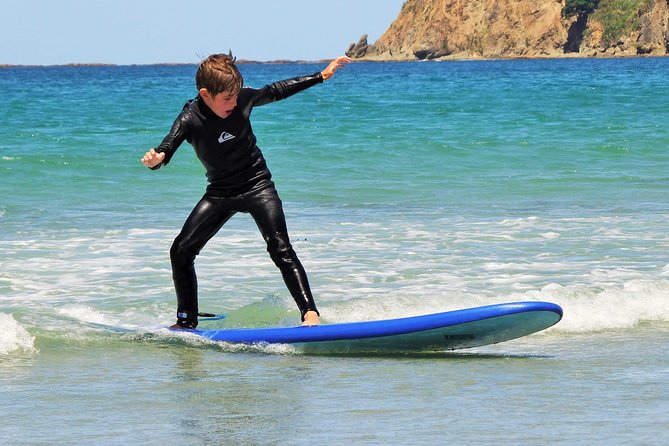
Once the basics are covered, you take the board into the ocean. The goal is not advanced surfing. It is to use the safety advice, paddle with purpose, catch a suitable wave, and attempt the pop-up under real conditions.
The two-hour length gives you time for instruction and several tries, though the exact number of waves will depend on tide, surf, group size, and your own energy. Surfing uses more effort than it appears to from the beach. The lesson’s focus on efficient technique is therefore helpful, particularly if your arms tire quickly.
The instructors make the biggest difference
For a first lesson, the instructor can matter more than the beach. Surfing has a steep emotional curve: you may feel excited while standing on the sand, then suddenly unsure once the board begins moving. A calm teacher helps you treat each failed attempt as part of the process.
Locke is repeatedly associated with patience and with helping beginners get onto the board. That includes children, which is a useful sign for families considering the session. Lydia is praised for friendly, targeted teaching, and Kirsty is described as patient and reassuring. The wider Saltwater Eco team is presented as approachable rather than intimidating.
I like the emphasis on a non-scary introduction. You do not need to arrive with confidence or a strong sense of balance. The lesson is designed to teach the basic actions step by step, with safety included from the start.
Still, keep expectations realistic. A group lesson cannot provide constant one-to-one coaching. With a maximum of 12 people, the group is not huge, but you will still share the instructor’s attention. If you need highly personal coaching, ask about private options before booking, since this particular experience is clearly a group lesson.
The beach and the beginner wave
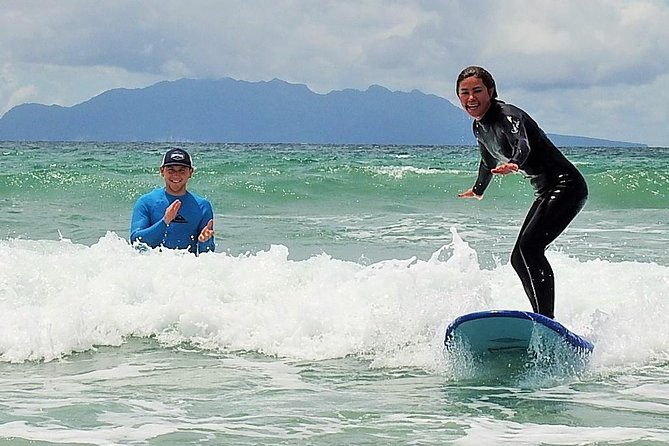
Omaha Beach is described as a beautiful white-sand beach with clear water and a clean setting for new surfers. Those details are not just decoration. A broad sandy shore makes the first part of the lesson easier to follow, and a beginner wave gives you a better chance to focus on timing and body position.
The surf itself is shaped by conditions. That is why the lesson schedule is tied to the tide. A time that works for one day may not be the best time on another, so do not assume you can freely shift the booking to fit your sightseeing plans.
You should also remember that a beach lesson is weather dependent. If poor weather forces cancellation, you will be offered another date or a full refund. That policy is fair, but it means you should avoid building an inflexible chain of plans around this activity.
The beach setting offers a pleasant bonus for family members who are not surfing. The information describes the area as suitable for all ages, and the supplied experiences include children aged 10 and 12. However, no specific minimum age, swimming requirement, or accessibility details are provided, so ask Saltwater Eco directly if those points matter to your group.
More surf lessons near Auckland:
- 2 Hour Surf Lesson – Te Arai Beach
★ 5.0 · 119 reviews - Auckland: Group Surfing Lesson with Muriwai Surf School
★ 4.9 · 34 reviews - Private 2 Hour Surf Lesson
★ 5.0 · 5 reviews
Boards, wetsuits, photos, and videos

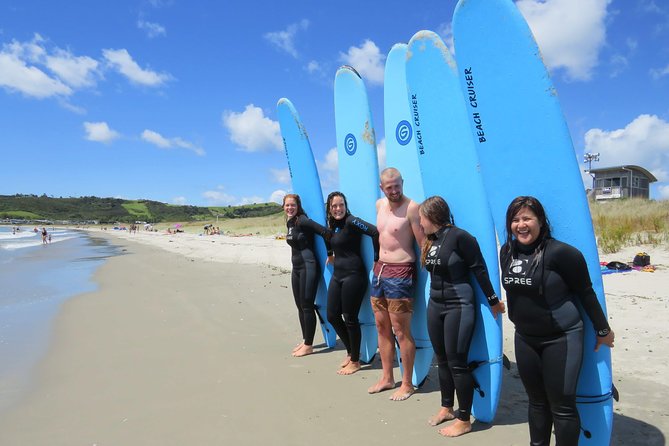
The price includes a surfboard and wetsuit. That is a real advantage. You can arrive without buying or arranging specialist gear, and the wetsuit makes the lesson more practical in New Zealand’s coastal water.
Equipment quality affects how easy the lesson feels. A suitable beginner board gives you more stability than a narrow performance board, while a properly fitting wetsuit keeps you warmer and less distracted. The available feedback describes the equipment as good, but you should still expect to spend part of the opening period getting comfortable with it.
Photos and videos are also included. This adds value in two ways. You get a souvenir of the experience, and you may be able to see your stance and timing afterward. Surfing often feels too fast to analyze in the moment, so a short video can help you understand what worked and what needs practice.
The details do not specify how many images or clips you receive, or how they are delivered. I would treat this as a welcome extra rather than the main reason to book. The real value is the instruction and use of equipment.
Is $49.03 good value?
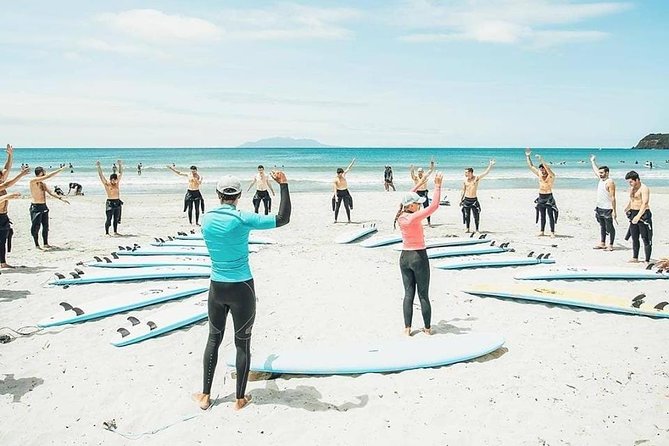
At $49.03 per person, the lesson is priced as an accessible introduction rather than a full-day surf camp. For that amount, you receive about two hours of instruction, a board, a wetsuit, and souvenir photos and videos. You also get safety guidance and coached practice, not just equipment hire.
That package compares well for someone trying surfing for the first time. Renting a board and wetsuit separately would not teach you how to paddle, pop up, or choose a safe approach to the water. The lesson also saves you from guessing your way through the first session.
The value is strongest if you actually want to learn a skill you can repeat later. Surfing is not a one-off sightseeing show. Once you understand the basics, you can keep practicing at suitable beaches, take another lesson, or return to Saltwater Eco for more help.
Group discounts may improve the price for families or friends booking together. The available details do not state the discount amount, so check the final total before assuming a particular saving.
The main cost beyond the ticket is getting to the beach. Transport is not included, and you must reach the meeting point yourself. If you are already planning a visit to the Te Arai or Omaha area, the lesson fits neatly into that day. If you are relying on public transport, the meeting point is described as being near public transportation, but no route, frequency, or travel time is supplied. Check the connection before booking.
Who will get the most from this lesson?
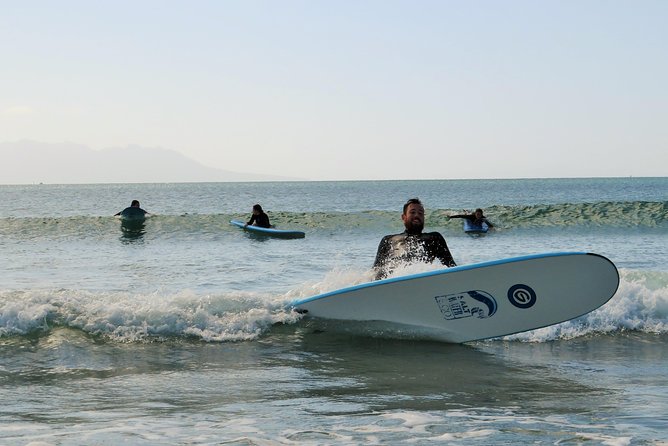
I would recommend this session to first-time surfers, families, and adults who feel curious but slightly nervous. The beach-based introduction, safety instruction, and patient coaching reduce the pressure of having to figure everything out alone.
It also suits people who want a compact activity rather than a long surf course. Two hours is enough to learn the foundations and try them in the water without committing your whole holiday to surfing.
Families should like the welcoming tone and the evidence that children aged 10 and 12 have taken part. The supplied information says most people can participate, but it does not state age limits or child-to-adult requirements. Confirm those details if you are booking for younger children.
This is less suitable if you want advanced coaching, long free-surf time, or a private instructor. The teaching is aimed at beginners, and the group can include up to 12 people. Strong intermediate surfers may find the content too basic.
You should also be comfortable with the physical demands of getting onto a board and paddling. The lesson is designed for beginners, not elite athletes, but it still involves repeated movement in the water. If you have fitness or mobility concerns, contact the provider before paying.
Timing, meeting point, and what to plan
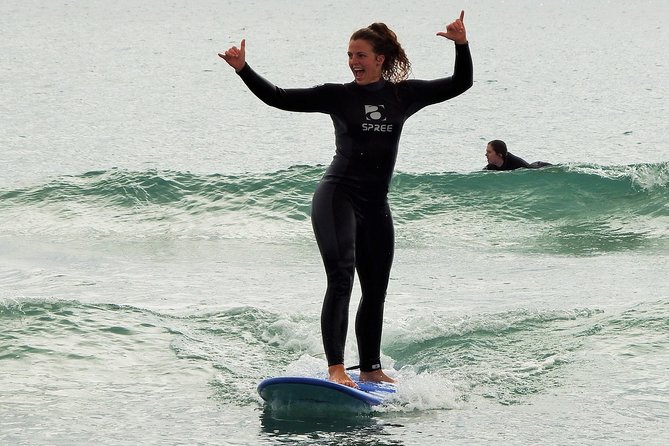
The listed session runs from 11:00 AM to 1:00 PM, Monday through Sunday, for the published operating period ending November 26, 2026. Lesson times are arranged around the tides, so the exact timing may need to follow water conditions rather than your preferred schedule.
Your stated meeting point is 708 Te Arai Point Road, Te Arai 0975, New Zealand. The activity ends back at the meeting point. Since transport is excluded, plan your route in advance and leave room for finding the right access point.
The experience is booked an average of 27 days ahead. That is a useful planning clue, particularly if you are visiting Auckland on fixed dates or booking for a group. I would reserve early during popular travel periods, then keep an eye on the cancellation terms.
You can cancel for a full refund up to 24 hours before the start time. Changes or cancellations inside that window are not accepted for a refund. If bad weather cancels the lesson, you receive the choice of another date or a full refund.
Bring a willingness to get wet and expect to spend the session actively learning. The provider supplies the core surf equipment, but the available information does not list personal items such as towels, swimwear, sunscreen, or food. Plan those basics yourself rather than expecting them at the beach.
What the feedback tells me about the experience
The strongest pattern is the teaching style. Locke is singled out for patience with beginners and children. Lydia is praised for helping a nervous learner progress, and Kirsty is associated with a calm approach that makes the water feel less intimidating.
That consistency matters. Plenty of surf lessons promise beginner instruction, but the real test is how the instructor responds when someone cannot pop up straight away. Here, the available comments repeatedly point to patience, clear guidance, and a friendly atmosphere.
The beach receives equally warm attention. White sand, clear water, and a clean setting create a pleasant backdrop, but the practical point is more important: the area is considered suitable for first attempts. You are learning in a place chosen for access and beginner conditions, not simply being taken to a famous surf spot.
The equipment also receives positive attention. Since boards and wetsuits are included, you can focus on learning rather than arranging gear. The photos and videos give the session a useful finish, especially if this is a special family day or your first time surfing.
The feedback does not remove the normal limits of a group lesson. You may need to wait briefly while others take their turns, and changing surf conditions can affect how many good waves you find. The five-star overall rating from six supplied reviews is encouraging, but it is still a small sample. I would value the clear practical pattern more than the number itself: patient instructors, good beginner conditions, and a relaxed introduction.
Should you book Saltwater Eco?
Book it if you want your first surf lesson near Auckland to feel structured, friendly, and manageable. The combination of a beginner beach, tide-timed sessions, included gear, and instructors such as Locke and Lydia makes this a good fit for newcomers who want help rather than a simple board rental.
It is particularly appealing for families and nervous beginners. The price is reasonable for two hours of instruction with equipment and media included, and the skills you learn can be practiced again later.
Before paying, confirm the exact beach because the information uses both Te Arai and Omaha Beach. Also check transport, age requirements, and the meeting instructions. If you want private coaching or advanced surf training, choose a different format. For a first taste of standing on a board, this is a practical and promising choice.
FAQ
How long does the beginner surf lesson last?
The lesson lasts approximately two hours, with the listed session running from 11:00 AM to 1:00 PM.
Where does the activity meet?
The stated meeting point is 708 Te Arai Point Road, Te Arai 0975, New Zealand. The activity ends back at the meeting point.
Is transport included?
No. You are responsible for getting to the lesson location. The meeting point is described as being near public transportation.
What equipment is provided?
Saltwater Eco provides a surfboard and wetsuit for the lesson.
What will I learn?
The lesson covers beach and water safety, correct use of the surf equipment, paddling, pop-up skills, and surfing technique suited to your ability and fitness.
How many people can join the lesson?
The activity has a maximum group size of 12 people.
What happens if the weather is poor?
If poor weather causes the lesson to be canceled, you will be offered another date or a full refund. For your own cancellation, you must cancel at least 24 hours before the start time to receive a full refund.
More Workshops in Auckland
- Wētā Workshop Unleashed Tour – Auckland
★ 4.5 · 903 reviews - Auckland: Wētā Workshop Unleashed Guided Tour Ticket
★ 4.6 · 406 reviews - Wētā Workshop Unleashed – Intro to Scars and Scrapes Workshop
★ 5.0 · 5 reviews
Just added around Auckland
- Heke Brewery and Distillery Tour in Waiheke Island with samples★ 4.5 · 3 reviews
- Hobbiton Movie Set Guided Day Tour with Lunch from Auckland★ 5.0 · 3 reviews
- London Routemaster Double Decker Auckland Discovery★ 5.0 · 3 reviews
- Auckland: Full-Day Fishing Charter (7 am – 4 pm)★ 4.3 · 3 reviews
- Boutique Waiheke Island Wine, Gin and Food Tour★ 5.0 · 3 reviews
- Auckland: 36 min scenic helicopter flight – Coast to Coast★ 5.0 · 3 reviews
- Auckland City Highlights Full Day Tour★ 4.6 · 3 reviews
- Coromandel Peninsula Discovery – Private Tour From Auckland★ 5.0 · 3 reviews
Piha & West Coast Beach Tours, compared.
Afternoon Piha Beach and Rainforest Tour from Auckland
Read our review →
Waitakere Ranges Wilderness Experience Tour from Auckland
Read our review →
Piha Waitakere Rainforest Wine Tour from Auckland
Read our review →
Auckland City Highlights, Afternoon Piha Beach & Rainforest Tour
Read our review →
Vineyards Honey and Black Sand Beaches from Auckland
Read our review →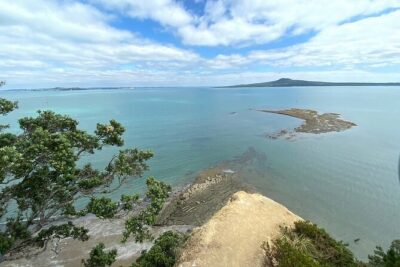
Browse the lists this tour appears in