
Reviewed · WHALE & DOLPHIN WATCHING
Auckland: Whale and Dolphin Watching Half-Day Eco Cruise
Auckland’s Dolphin Explorer turns a city sightseeing trip into a search for wild marine life. The 65-foot catamaran slips out from the Eastern Viaduct, passes Devonport and Rangitoto Island, then spends several hours scanning the Hauraki Gulf for dolphins, whales, orcas, seabirds, and the occasional shark.
I like two things right away: the crew treats this as a marine research trip, not just a wildlife ride, and the boat is small enough for good viewing without feeling like a huge ferry. I also like the no-sighting promise, which gives you a free second cruise if no marine mammals appear. The catch is simple: wildlife is wild, and you may see dolphins but no whales, or no mammals at all. Bring patience, warm clothes, and realistic hopes.
In This Review
- Key points to know before you book
- Leaving Auckland from Berth 9
- Rangitoto, Devonport, and the first part of the cruise
- Searching for dolphins and whales
- Birds, sharks, penguins, and the smaller discoveries
- The science and conservation angle
- What the 270 minutes feel like
- The free second cruise and the limits of nature
- Weather, comfort, and who should book
- Is the Auckland Whale and Dolphin Safari worth booking?
- FAQ
- How long does the Auckland whale and dolphin cruise last?
- How much does the cruise cost?
- Where does the boat leave from?
- How early should I arrive?
- What happens if no marine mammals are seen?
- What animals might I see?
- Is food included?
- What should I bring?
- Is the cruise wheelchair accessible?
Key points to know before you book
- The cruise lasts 4.5 hours: This is a serious half-day outing, not a quick harbor spin.
- The boat leaves from central Auckland: Berth 9 at Eastern Viaduct Marina is opposite the Maritime Museum.
- Marine research is part of the trip: The crew may collect samples and explain plankton, animal behavior, and conservation work.
- Dolphins are often the main event: Sightings can include common dolphins, bottlenose dolphins, young dolphins, and large pods.
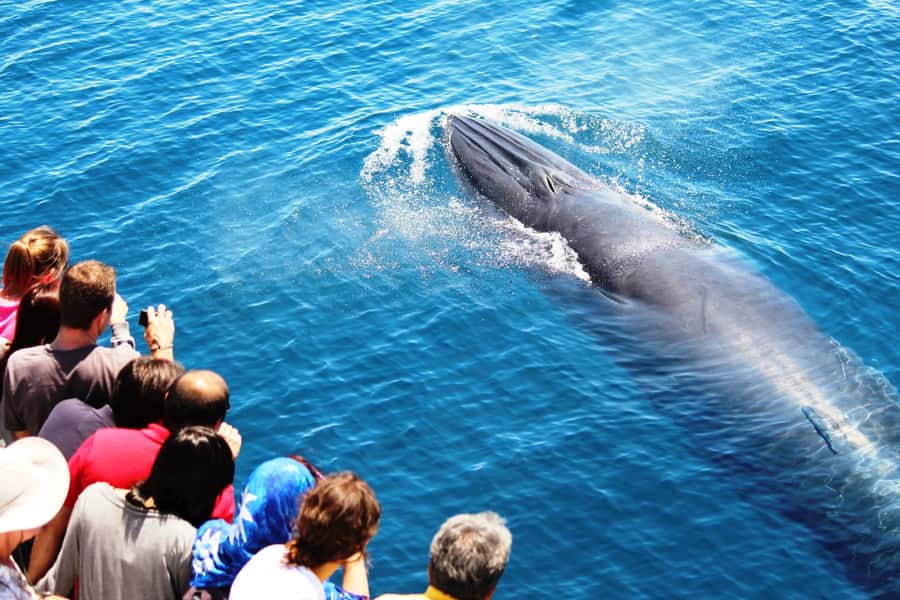
- Whales are possible, not promised: Bryde’s whales have been seen, sometimes at a distance, along with sharks, penguins, gannets, and shearwaters.
- Poor luck brings a useful safety net: If no marine mammals are seen, you can cruise again for free.
Leaving Auckland from Berth 9
The tour begins at Berth 9, Eastern Viaduct Marina, opposite the Maritime Museum. You reach it from the western end of Quay Street. Plan to arrive 30 minutes before departure, since check-in closes 15 minutes before the boat leaves.
This location is one of the tour’s best practical features. You do not need a long transfer from central Auckland, and the opening minutes give you a quick orientation from the water. The boat passes North Head and Devonport before heading toward Rangitoto Island and the wider Hauraki Gulf.
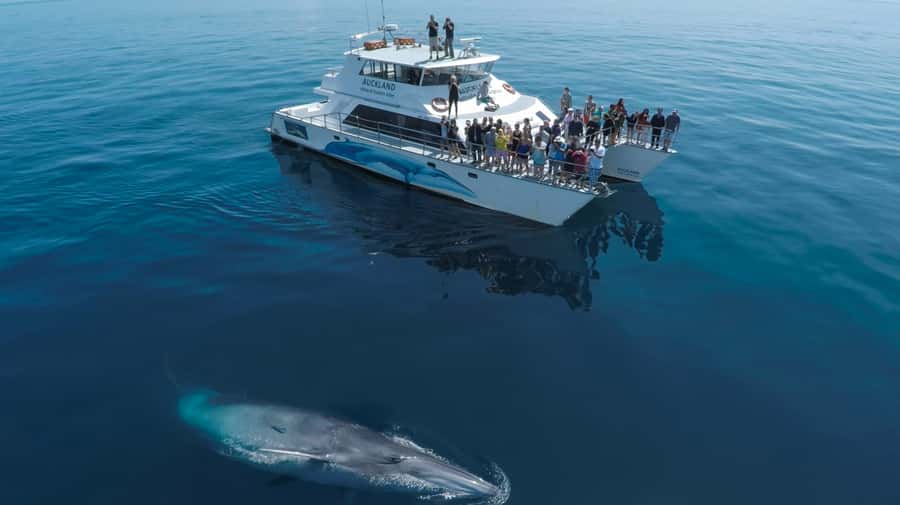
The catamaran itself is called the Dolphin Explorer. Its size gives you a useful middle ground. It is large enough to feel stable and comfortable, yet not so large that you are packed into a distant viewing deck. There are several seating options, and the open sides let you move around when an animal appears.
Still, this is a boat, not a floating lounge. Narrow doorways and stairs mean it is not wheelchair accessible. Young children are allowed from age five, but they must stay closely supervised. Unaccompanied minors are not permitted.
More whale and dolphin trips from Auckland:
- Auckland Dolphin and Whale Watching Eco-Safari Cruise
★ 4.5 · 1,790 reviews - Auckland: Tikapa Moana Whales, Dolphins and Islands Cruise
★ 3.9 · 292 reviews - Auckland: Tikapa Moana Dolphin, Whale and Island Cruise
★ 4.0 · 17 reviews
Rangitoto, Devonport, and the first part of the cruise
The harbor departure is more than filler before the wildlife begins. You get views of Auckland’s waterfront, North Head, Devonport, and Rangitoto Island, with the city gradually shrinking behind you.
Rangitoto is especially memorable from the water. Its volcanic form gives the trip a strong sense of place, and the island helps you understand how close Auckland’s urban center is to open marine country. If wildlife takes time to appear, these views keep the first part of the ride worthwhile.
The boat then moves into the Hauraki Gulf Marine Park. This is where the mood changes. The city becomes a reference point rather than the main subject, and everyone begins watching the water for a fin, a blow, or a cluster of seabirds.
The trip can be windy even on a sunny day. Rain is also possible, and the operator may cancel when wind, weather, or sea conditions create a safety problem. That is not a flaw in the experience. It is a reminder that a marine safari depends on conditions that no booking system can control.
Searching for dolphins and whales
The core of the cruise is a moving search. The skipper and marine staff watch for signs of animal activity, including seabird activity and feeding areas. The crew explains what they are looking for and why certain parts of the gulf may be more promising.
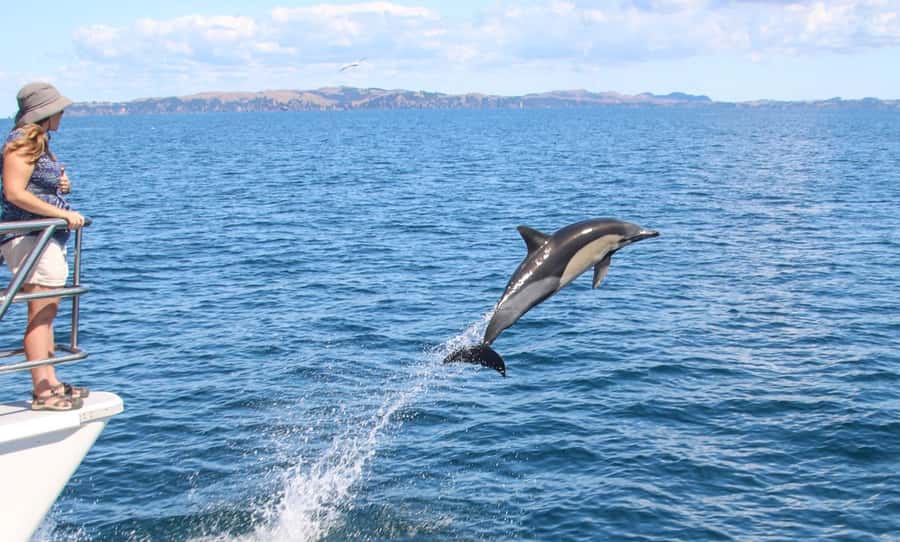
Dolphins are often the most dependable reward. Sightings have included common dolphins swimming close to the boat, large pods, mothers with young, and animals riding near the bow. Some trips have recorded more than 100 dolphins, while others have involved smaller groups observed for around 30 minutes.
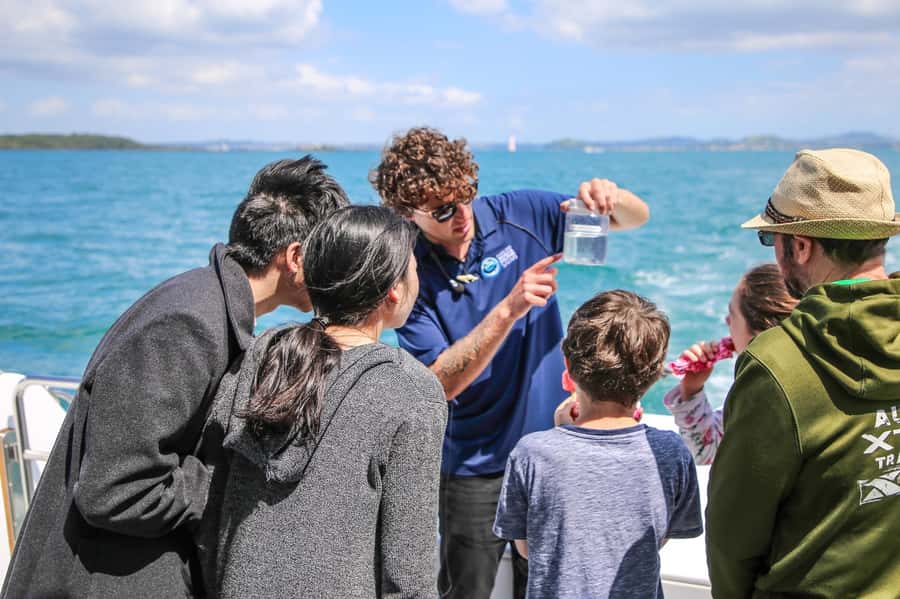
That time matters. The crew does not simply point at a distant fin and rush away. When conditions allow, the boat can remain with the animals long enough for you to watch their movement and behavior. You may see dolphins surface beside the hull or pass beneath the boat.
Bottlenose dolphins are among the species you may look for, while orcas also visit waters near Auckland. The experience description specifically highlights them, but you should not treat either sighting as certain. A wildlife trip is best booked for the chance to see animals in their own home, not for a guaranteed checklist.
Whales bring a different kind of excitement. Bryde’s whales have been seen on several trips, sometimes close enough for a good look and sometimes far off. Some outings have produced one whale, while others have included two, three, or more. Sightings can also include whales in the distance, so binoculars are useful.
The crew’s restraint is important here. The boat is designed to approach marine mammals more closely than some whale watching operations, but the staff also explains the need to keep respectful distances. The aim is a good view without turning the animals into a performance.
Birds, sharks, penguins, and the smaller discoveries
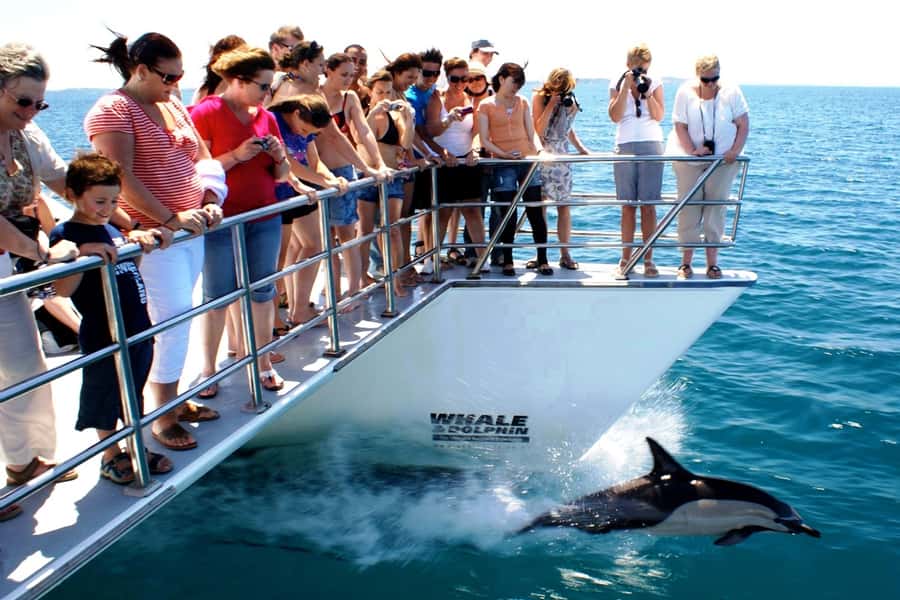
The gulf offers more than the headline species. Australasian gannets are a regular highlight, especially when they plunge into the water around feeding activity. Shearwaters, blue penguins, and other seabirds have also appeared during the cruise.
You might see the birds before you see a whale. That is useful to remember because the crew often uses bird behavior as a clue to what is happening below the surface. A busy patch of water, a group of gannets, or a sudden change in seabird movement can make the search feel like a real field observation rather than a simple sightseeing ride.
Sharks have also been spotted, including blue sharks and a hammerhead shark. These encounters are less predictable than dolphin sightings, but they add to the sense that the gulf is a working ecosystem with several layers of life.
One especially good feature is the attention to small marine life. The crew may discuss plankton and collect a sample for research. That detail gives the trip more depth. You begin to see that whales and dolphins depend on a much larger food chain, much of which is too small to notice from the deck.
A few more Auckland tours and experiences worth a look
- Half-day Discover Auckland City Sightseeing Tour
★ 5.0 · 1,080 reviews - Auckland Scenic Half-Day City Sightseeing Tour
★ 4.8 · 532 reviews - Half-Day: Small Group Auckland Scenic Tour – 4 HOURS
★ 5.0 · 152 reviews - Auckland Shore Excursion: Half-Day Guided City Tour
★ 5.0 · 148 reviews
The science and conservation angle
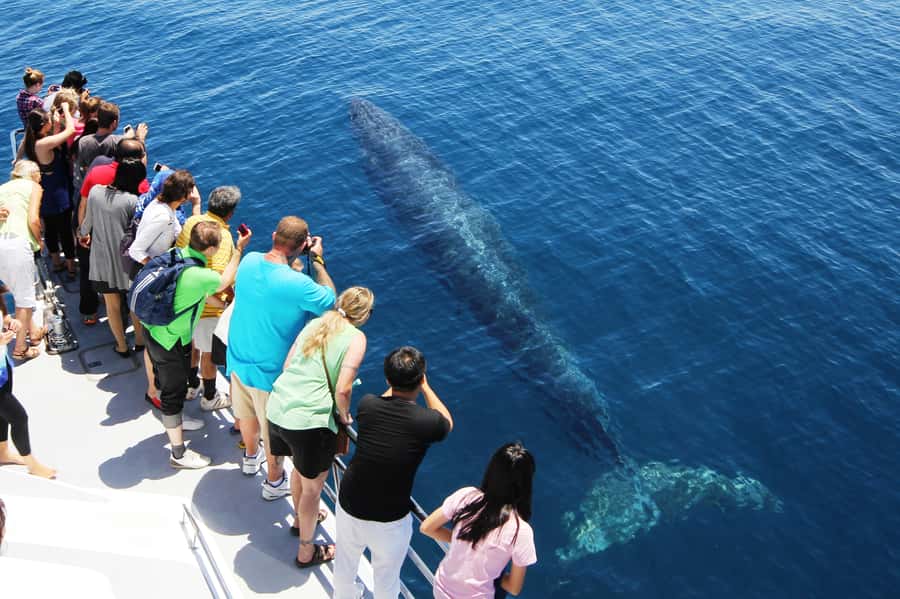
The marine research element is the clearest reason to choose this cruise over a basic sightseeing boat. Marine biologists and other crew members explain animal behavior, local geography, seabirds, plankton, and the methods used to track marine mammals.
On some trips, the crew has stopped to collect a research sample. The staff may also carry out other work while the boat is at sea. You are not simply hearing a prepared talk. You may see the working side of a research vessel, with the crew balancing tourism, observation, and conservation.
The commentary is delivered by the skipper and marine staff, so the tone can vary by crew. Names praised on individual outings include Emily, Sanaa, John, Joseph, Toni, Brittany, Jo, George, and others. The best guides combine clear explanations with a relaxed sense of humor, and several crew members have been singled out for their obvious care for the ocean.
A dollar from every ticket goes to the Hauraki Gulf Guardians fund. That is not enough reason to ignore the price, but it does improve the value of the purchase. Your fare helps support work connected with protecting and restoring the gulf, while the trip itself teaches you why that work matters.
What the 270 minutes feel like
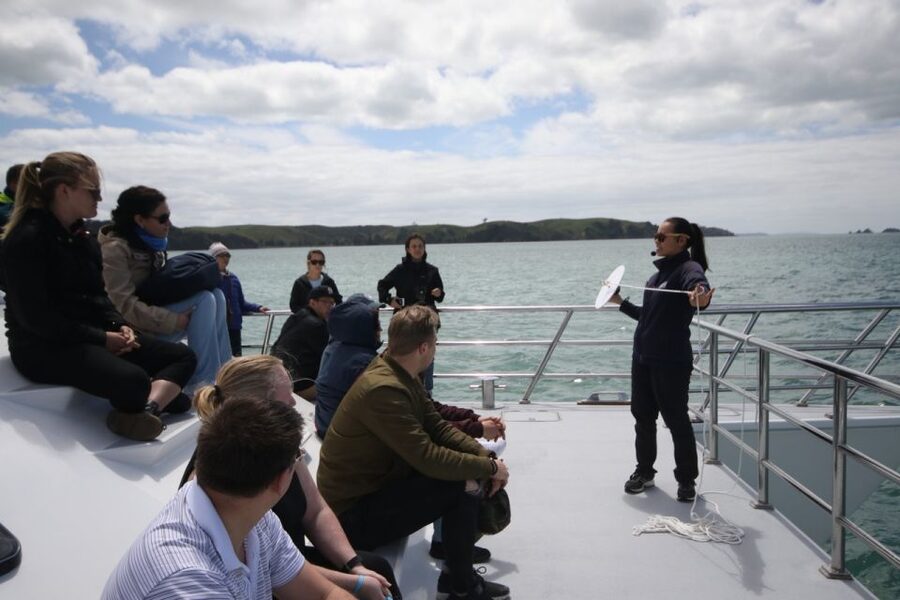
Four and a half hours is long enough to reach productive areas of the gulf and wait for wildlife. It is also long enough for the weather, motion, and repeated scanning to wear you down if you arrive unprepared.
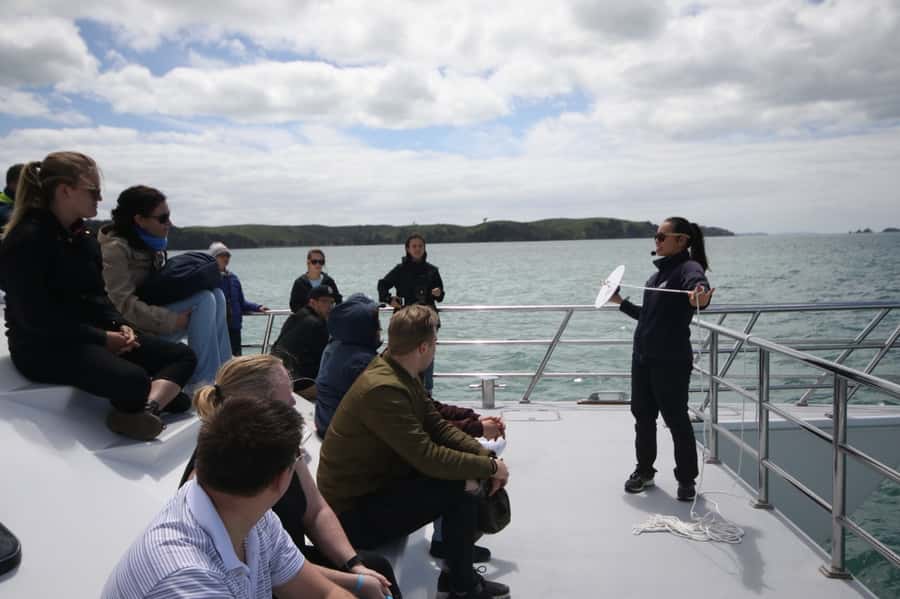
The cruise usually has a rhythm: harbor views first, open-water travel next, then long periods of watching, listening, and repositioning. When animals appear, the pace changes quickly. Everyone moves toward the best viewing side, and the crew gives instructions so the boat can remain safe and the sighting can be shared.
A calm day can feel effortless. A windy day is more demanding. Take sea-sickness medicine before departure if you need it, rather than waiting until the boat is already moving. Wear warm layers and pack a showerproof jacket, sun hat, sunscreen, camera, binoculars, and any personal medication.
Food and drinks are not included. A small range of snacks, hot food, and drinks is sold onboard, including beer and wine. I would still bring water and avoid relying on the onboard selection as a full meal, especially if you know you get hungry during long boat rides.
The free second cruise and the limits of nature
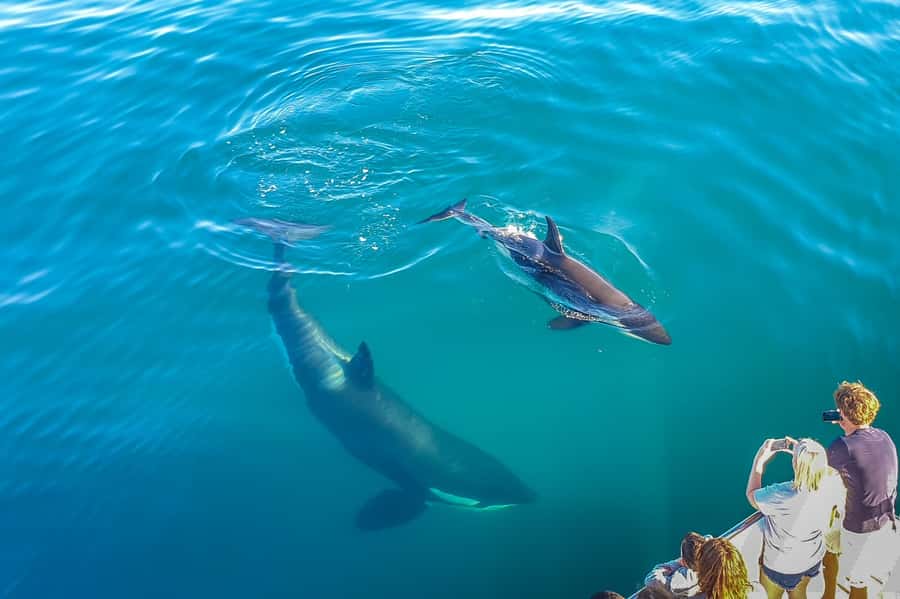
The free second cruise is one of the strongest booking protections here. If you see no marine mammals, you can take the trip again at no cost. This does not guarantee whales on the second attempt, but it recognizes that the main attraction cannot be controlled.
The policy is particularly useful for people staying in Auckland for several days. If your schedule is tight, it has less practical value. You may not have time to return, so choose a departure that leaves room for a second attempt if possible.
The policy also helps put the price in perspective. At $130 per person, this is not a cheap harbor cruise. You are paying for a 270-minute trip, a purpose-built catamaran, trained crew, marine commentary, research activity, and a conservation contribution.
For a short Auckland visit, I think the price is reasonable if seeing wildlife in the open gulf is a main goal. If you mainly want city views, a shorter harbor cruise will cost less and use less of your day. The value improves when you care about the science and conservation side, since this is not just a ride to take photographs.
Weather, comfort, and who should book
This tour suits adults, older children, photographers, bird watchers, and anyone who enjoys learning while looking for wildlife. It is also a good fit if you want a major nature experience without leaving Auckland for a full day.
Families should think carefully about the 4.5-hour duration. Children under five are permitted only with close supervision, and unaccompanied minors are not allowed. The boat is not wheelchair accessible because of stairs and narrow doorways.
People who dislike motion, cold air, or uncertain results may find the cruise frustrating. The open water can be rough, and even a well-run trip may produce only birds or distant animals. I would not book this as the sole reason for a tightly planned Auckland itinerary.
For everyone else, preparation makes a big difference. Check the forecast, dress for colder conditions than you expect on shore, and keep your camera ready. A showerproof jacket is more useful than a fashionable coat, and binoculars can turn a far-off whale or seabird into a worthwhile sighting.
Is the Auckland Whale and Dolphin Safari worth booking?
I would book this cruise if you have half a day in Auckland and want a genuine chance to see marine life in the Hauraki Gulf. The strongest reasons are the central departure point, comfortable mid-sized catamaran, strong marine commentary, and the fact that the crew also supports research and conservation.
Book with realistic expectations. Dolphins may provide the closest and most active encounter, while whales can be distant or absent. If you accept that nature sets the schedule, the free second cruise and conservation contribution make the $130 fare easier to justify.
Skip it if you need a guaranteed whale sighting, have limited time, or are uncomfortable on open water. For everyone else, this is one of Auckland’s more worthwhile ways to spend a half-day, especially when the crew is able to show you the gulf as a living place rather than just a scenic backdrop.
FAQ
How long does the Auckland whale and dolphin cruise last?
The cruise lasts 270 minutes, or 4.5 hours.
How much does the cruise cost?
The listed price is $130 per person.
Where does the boat leave from?
The boat departs from Berth 9 at Eastern Viaduct Marina, opposite the Maritime Museum. The marina is accessed from the end of Quay Street heading west.
How early should I arrive?
You should arrive 30 minutes before departure to check in. Check-in closes 15 minutes before the scheduled trip time.
What happens if no marine mammals are seen?
You can take the cruise again for free if no marine mammals are seen. The second cruise remains subject to available departure times and suitable sea conditions.
What animals might I see?
Possible sightings include orcas, bottlenose dolphins, common dolphins, whales, Australasian gannets, shearwaters, blue penguins, sharks, and other seabirds. Sightings are not guaranteed.
Is food included?
Food and drinks are not included. A small selection of snacks, hot food, and drinks is available to buy onboard, including beer and wine.
What should I bring?
Wear warm clothes and bring a showerproof jacket, sun hat, sunscreen, camera, binoculars, and personal medication if required. Sea-sickness medication should be taken before the trip.
Is the cruise wheelchair accessible?
No. The vessel has stairs and narrow doorways, so it is not wheelchair accessible.
Just added around Auckland
- Heke Brewery and Distillery Tour in Waiheke Island with samples★ 4.5 · 3 reviews
- Hobbiton Movie Set Guided Day Tour with Lunch from Auckland★ 5.0 · 3 reviews
- London Routemaster Double Decker Auckland Discovery★ 5.0 · 3 reviews
- Auckland: Full-Day Fishing Charter (7 am – 4 pm)★ 4.3 · 3 reviews
- Boutique Waiheke Island Wine, Gin and Food Tour★ 5.0 · 3 reviews
- Auckland: 36 min scenic helicopter flight – Coast to Coast★ 5.0 · 3 reviews
- Auckland City Highlights Full Day Tour★ 4.6 · 3 reviews
- Coromandel Peninsula Discovery – Private Tour From Auckland★ 5.0 · 3 reviews
Whale & Dolphin Watching, compared.
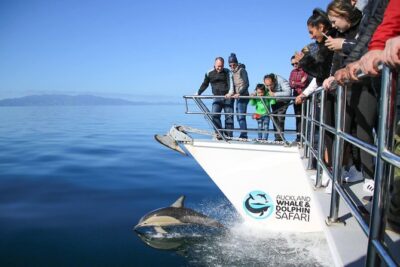
Auckland Dolphin and Whale Watching Eco-Safari Cruise
Read our review →
Tikapa Moana Whales, Dolphins and Islands Cruise
Read our review →
Browse the lists this tour appears in